Word
運命
Meaning in Englishfate
Animated kanji stroke order
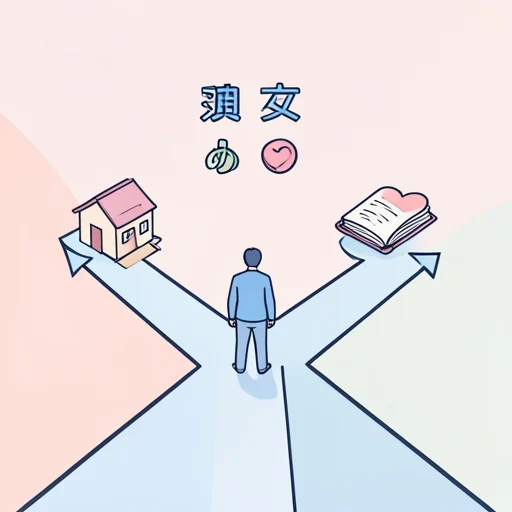
Word context
What it means
運命 denotes the force or natural course that determines events in a person's life, typically viewed as inevitable or preordained.
Main meanings
- In everyday usage, indicates the predetermined nature of life events or encounters
- In literature and media, frames characters' unavoidable destinies as a central theme
- In philosophical or religious contexts, discusses determinism, cosmic order, or divine will
How to use it
Used in formal writing and everyday speech to discuss fate or destiny; common expressions include 運命を受け入れる and 運命を変える; tone is generally serious or reflective; appropriate in literature, philosophy, and storytelling.
Variants and close terms
- 宿命 (shukumei) — predestination
- 定め (sadame) — decree, fate
- 運命論 (unmeiron) — determinism
Composition
- 運: fortune, luck, movement; in compounds it evokes the idea of the force that carries events
- 命: life, fate, order; communicates inevitability and the course of life
Etymology
unmei originates as a Sino-Japanese on reading combo where 運 provides un and 命 contributes mei; the pronunciation merged in modern Japanese to a single unit.
Origin
運命 entered Japanese discourse through Chinese thought and Buddhist influence, appearing in Heian period literature and becoming a staple in later philosophical and popular writing.
Word class
Noun (名詞)
Related words by kanji and components
N3
生命
seimei
life, vital existence
N3
命
inochi
life, existence, precious life
N3
運
un
luck, fortune, fate
N3
幸運
kouun
good luck, fortune
N3
命じる
meijiru
order, command, appoint
N3
命令
meirei
order, command, decree
N4
運転
unten
driving, operation
N4
運ぶ
hakobu
carry, transport
N4
運動
undou
exercise, movement, physical activity