介護
Meaning in Englishnursing
Animated kanji stroke order
Related sentences
Related sentences
There are no published items in this section yet.
Word context
What it means
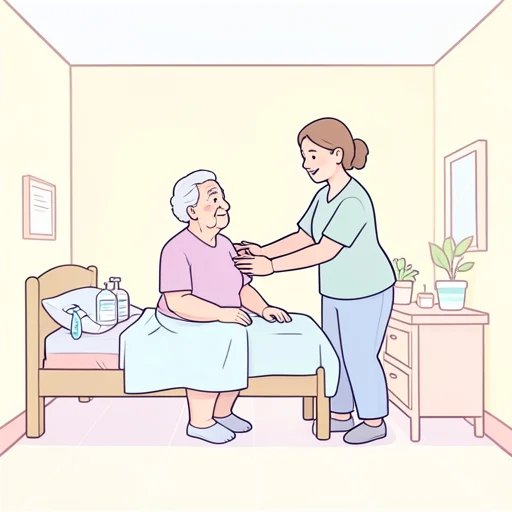
介護 (kaigo) refers to the act of providing ongoing support to someone who cannot fully manage daily living tasks, typically the elderly or disabled, including help with daily activities and health-related assistance.
Main meanings
- formal long-term care services for the elderly or disabled
- domestic caregiving by family or informal caregivers
- institutional care settings such as nursing facilities
- policy and social security context around elder care in Japan
How to use it
Used in formal policy language, healthcare settings, and everyday talk about caregiving, particularly when describing tasks, services, or systems for assisting elderly or disabled people; common collocations include 介護をする, 介護サービス, 介護施設.
Variants and close terms
- 在宅介護 — zaitaku kaigo: home care
- 施設介護 — shisetsu kaigo: institutional care
- 介護予防 — kaigo yobō: prevention of needing care
- 看護 — kango: nursing, medical care
Composition
- 介: aid, intervene
- 護: protect, guard
- together they express providing help that protects daily life and enables a person to continue living with dignity
Etymology
介護 is a Sino-Japanese compound read with on'yomi kai-go, combining 介 (aid) and 護 (guard) to form the concept of helping and protecting daily life; the pronunciation kaigo follows common on'yomi patterns for two-kanji compounds.
Origin
Modern Japan; the term emerged after World War II as welfare concepts expanded, becoming common in policy discourse in the late 20th century and gaining prominence with the long-term care insurance system introduced in 2000.
Word class
Noun (名詞)