Word
正解
Meaning in Englishcorrect, right answer, solution
Animated kanji stroke order
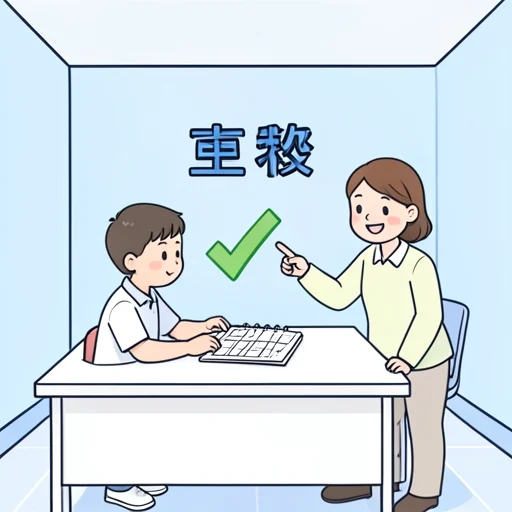
Sentence
Related sentences
Related sentences
There are no published items in this section yet.
Word context
What it means
What does 正解 mean? It designates the correct answer in a question, task, or puzzle, i.e., the solution that is true or accepted; in everyday discourse it can refer to the validated interpretation or result in a discussion or test.
Main meanings
- Primary meaning: the correct answer in a test, quiz, exercise, or any problem requiring a choice or solution.
- Nuance: can denote the publicly accepted solution or conclusion in a discussion or reasoning process.
- Related usage: often paired with 不正解 to contrast with the incorrect option or with 答え to mean the answer.
How to use it
Used to refer to the correct answer in exams, quizzes, puzzles, and problem solving; in formal situations like classrooms and tests it's common, while in casual talk it appears in phrases like 正解です, これは正解だ, 正解を選ぶ.
Variants and close terms
- 正答(せいとう)— synonym; formal for an exact answer in tests.
- 当たり(あたり)— casual; means that's right or spot on.
- 回答(かいとう)— answer; not necessarily correct.
- 不正解(ふせいかい)— incorrect.
- 誤り(あやまり)— error.
Composition
- 正: right, correct
- 解: to solve, understand
- 合起来: two-kanji compound meaning the correct answer, the solution that is correct
Etymology
正 meaning right, correct; sei on'yomi; 解 meaning to solve, understand; kai on'yomi; when combined they form 正解 meaning the correct answer.
Word class
Noun (名詞)
Word
Related words by kanji and components
N2
分解
bunkai
analysis, disassembly
N3
修正
shuusei
correction, revision, amendment
N3
正午
shougo
noon, midday
N3
正直
shoujiki
honesty, frankness, sincerity
N3
正
sei
true, correct, regular
N3
正確
seikaku
accurate, exact, correct
N3
正式
seishiki
official, formal, regular
N3
解決
kaiketsu
solution, resolution, settlement
N3
解釈
kaishaku
interpretation, explanation
Kanji