消毒
Meaning in Englishdisinfection
Animated kanji stroke order
Related sentences
Related sentences
There are no published items in this section yet.
Word context
What it means
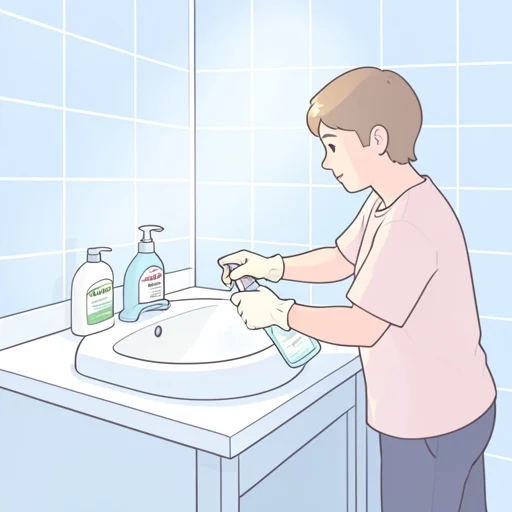
消毒 means the act of removing or neutralizing microorganisms to prevent infection, typically on surfaces, instruments, or tools; it covers procedures that reduce microbial load to safe levels using chemical agents, heat, or irradiation.
Main meanings
- Disinfection: reducing microbial load on surfaces, tools, or environments
- Sanitization or sterilization in healthcare and food safety contexts
- Disinfection practices in households and public spaces
How to use it
Used in medical, laboratory, food-service, and domestic hygiene contexts; common in formal writing and public health guidelines; typically appears as 消毒する to express the act of disinfecting, with contexts ranging from clinical protocols to cleaning instructions; registered terms appear in product labeling and safety manuals.
Variants and close terms
- 除菌 (じょきん, disinfecting/removal of bacteria) – broader, often colloquial
- 滅菌 (めっきん, sterilization) – complete elimination of all microorganisms
- 消毒剤 (しょうどくざい, disinfectant) – chemical agents used for disinfection
Composition
- 消: to extinguish, erase, or remove
- 毒: poison or toxin
- Together: the act of removing poisons or contaminants to render something safe
Etymology
しょうどく is formed from the on'yomi readings of 消 (しょう) and 毒 (どく); as a Sino-Japanese compound, it yields the meaning of removing poison or contaminants, with the pronunciation preserved in modern Japanese.
Word class
Noun (suru-verb)