災難
Meaning in Englishcalamity, misfortune
Animated kanji stroke order
Related sentences
Related sentences
There are no published items in this section yet.
Word context
What it means
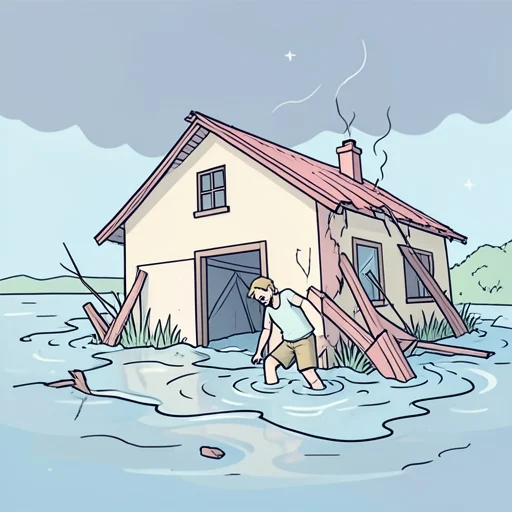
災難 means a disaster or calamity, referring to a serious event causing damage, loss, or hardship; it covers natural or man-made catastrophes and may also denote severe personal misfortune. It is typically used in formal, literary, or news contexts and can appear with verbs such as 遭う.
Main meanings
- Broad sense of a major disaster or calamity, including natural disasters, accidents, or large-scale misfortunes.
- Figurative use to refer to severe personal trials or misfortune in life, reputation, or fortune; often in literary or formal writing.
- Usage tends to be more formal and written than casual, and it pairs with verbs like 遭う.
How to use it
Used in formal and written Japanese to denote disasters or misfortune; common constructions include 災難に遭う, 災難を免れる; typical contexts include news, history, literature, and religious or philosophical discourse; casual speech may use 不運 or other terms for misfortune.
Variants and close terms
- 災い (わざわい) - calamity
- 災害 (さいがい) - disaster
- 厄災 (やくさい) - calamity
- 不運 (ふうん/ふこう) - misfortune
- 天災 (てんさい) - natural disaster
Composition
- 災: calamity, disaster; on'yomi sai; kun wazawai
- 難: difficulty, hardship; on'yomi nan; kun katai, muzukashii
Etymology
災 on'yomi sai; kun wazawai. 難 on'yomi nan; kun katai, muzukashii. When combined as 災難 the common on'yomi is sainan, a Sino-Japanese coinage; pronunciation follows standard readings in modern Japanese.
Origin
Attestations appear in classical Japanese texts from the Heian period onward; the term was borrowed from Chinese and became common in formal writing and later in Edo-period literature and official language.
Word class
noun (名詞)