Word
一番
Meaning in Englishfirst, best, most
Animated kanji stroke order
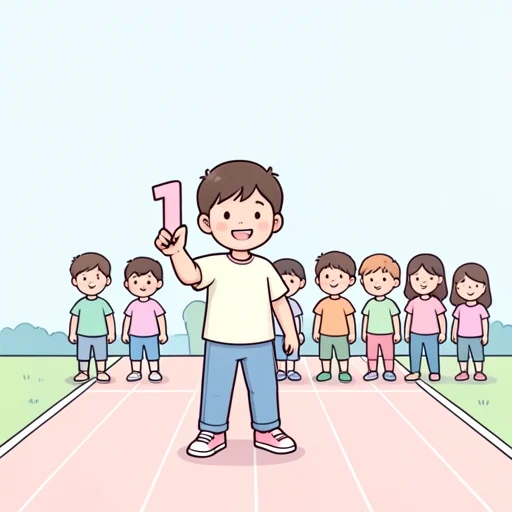
Sentence
Related sentences
Word context
What it means
It means "number one" or "the most" and answers which thing is highest in rank, degree, or priority; the word singles out the top choice, highest intensity, or first position in a list or comparison for English speakers.
Main meanings
- Used as a superlative adverb to indicate the greatest degree of an adjective or preference (equivalent to "most").
- Functions as a noun to name the top-ranked person, item, or choice (equivalent to "the first" or "number one").
- Marks ordinal position or sequence in practical contexts such as queues, turns, or steps.
- Acts as a casual emphatic word to stress opinion or priority (similar to "by far" or "the very").
How to use it
Appears widely in spoken and written Japanese: placed before adjectives or verbs when used adverbially to form superlatives, used as a standalone noun to indicate first place or top rank, and used in everyday decisions, rankings, and instructions; appropriate in casual and neutral-formal contexts (marketing, conversations, lists), but slightly informal when used for emphatic speech or personal preference.
Variants and close terms
- もっとも (mottomo) — most (formal)
- 第一 (daiichi) — first, primary
- ナンバーワン (nanbāwan) — number one (loanword)
- 最後 (saigo) — last (antonym)
Composition
- 一 (ichi): the numeral one, indicating singularity or the starting point.
- 番 (ban): turn, number, or order—used for ranking or sequence.
- Together they form a compound meaning the top rank or the highest degree: literally the "one (top) number" that identifies first/most.
Word class
adverb, noun (副詞, 名詞)
Word
Related words by kanji and components
N1
一括
ikkatsu
all together, batch
N1
一気
ikki
at one push, in one gulp
N1
一挙に
ikkyoni
at a stroke, with a single swoop
N1
一見
ikken
a look, a glimpse, glance; first meeting
N1
一切
issai
without exception, the whole
N1
一心
isshin
one mind, with rapt attention
N1
一変
ippen
complete change
N1
単一
tanitsu
single, simple, sole
N1
一息
hitoiki
a breath, a pause, an effort
Kanji