Word
不自由
Meaning in Englishdiscomfort, disability, inconvenience
Animated kanji stroke order
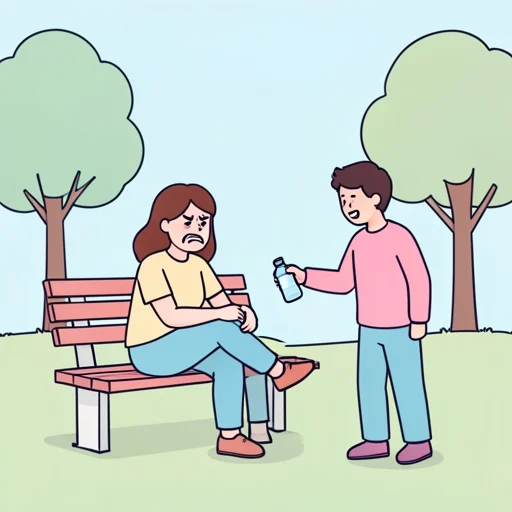
Sentence
Related sentences
Related sentences
There are no published items in this section yet.
Word context
What it means
What does 不自由 mean? It denotes a lack of freedom or a constraint on one's actions, describing a condition where one cannot act freely due to physical, social, or practical factors, rather than moral or political ideology alone.
Main meanings
- expresses a lack of freedom in action or movement, whether physical, social, or situational
- captures the sense of inconvenience or impracticality in daily life when options or paths are constrained
- can refer to a state of disability or mobility limitation, especially in contexts discussing accessibility or independence
How to use it
Used as a noun or na-adjective to describe situations where one is restricted, unable to act freely, or faced with practical obstacles. In formal writing, it appears in medical, legal, or policy contexts to discuss limitations, while in everyday speech it conveys personal or situational inconvenience without asserting a stance on freedom as a political concept.
Variants and close terms
- 不便 (ふべん, fuben) — inconvenience
- 制限される (せいげんされる, seigen sareru) — to be restricted
- 自由がない (じゆうがない, jiyuu ga nai) — not free
- 不自由さ (ふじゆうさ, fujiyuusa) — the state of being unable
Composition
- 不 = negation prefix meaning not or un-
- 自由 = freedom, liberty
- When combined, 不自由 conveys the idea of lacking freedom or being constrained
Word class
na-adjective (noun)
Word
Related words by kanji and components
N1
不審
fushin
suspicious, doubt, infidelity
N1
不振
fushin
dullness, slump, stagnation
N1
不調
fuchou
bad condition, disorder, slump
N1
不当
futou
injustice, impropriety, unfair
N1
不動産
fudousan
real estate
N1
不評
fuhyou
bad reputation, disgrace, unpopularity
N1
不服
fufuku
dissatisfaction, discontent, disapproval
N1
不明
fumei
unknown, ambiguous
N1
不良
furyou
badness, delinquent, failure
Kanji