二日
Meaning in Englishtwo days, second day of month
Animated kanji stroke order
Related sentences
Related sentences
There are no published items in this section yet.
Word context
What it means
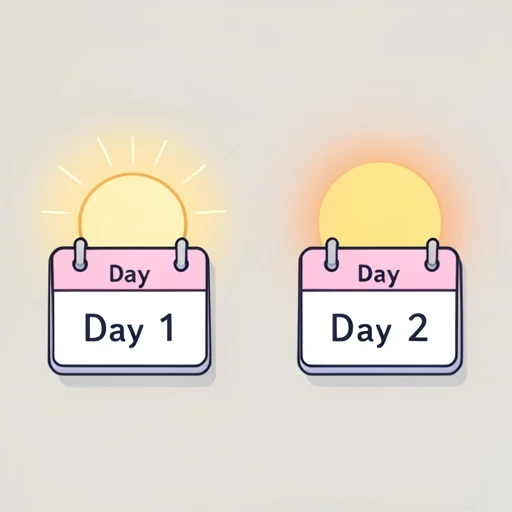
What does 二日 mean? It denotes either a two-day period or the second day of a month, commonly read futsuka in everyday Japanese, and is used for counting days as well as identifying calendar dates.
Main meanings
- Two-day duration
- The second day of the month
- In compounds and set phrases marks order or repetition across days (futsukame is the second day)
How to use it
Usage: In casual conversation, futsuka denotes either two days or the 2nd day of a period; in formal writing or scheduling, the same forms appear with compounds like 二日間 and 二日目, with 間 indicating duration and 目 indicating sequence; when used as a standalone date, it refers to the calendar day rather than a duration.
Variants and close terms
- ふつか (futsuka) — common reading
- 二日間 (ふつかかん) — futsuka-kan
- 二日目 (ふつかめ) — futsuka-me
- はつか (hatsuka) — 20th day (related day-counting)
Composition
- 二 — two
- 日 — day; when combined with the kun-reading suffix -ka, forms futsuka, the day-number reading
Etymology
Futsuka arises from the native kun-reading of 二日, formed by futa meaning two and a contextual suffix ka that marks a calendar day; early Japanese counted days with irregular readings for the 1st through 10th, and that pattern stabilized into futsuka for the second day and for two-day spans in everyday speech; on-yomi forms such as nijitsu appear only in rare Sino-Japanese compounds and are not used for standard day counting.
Origin
Origin: The naming of the second day and short-duration counts developed within classical Japanese calendar practices; irregular day-readings for the 1st–10th days persisted into the Edo period and remain part of modern usage, reflected in futsuka as the standard reading for 二日 when referring to days or dates.
Word class
Noun (日-counter for days)