実家
Meaning in English(one's parents') home
Animated kanji stroke order
Related sentences
Related sentences
There are no published items in this section yet.
Word context
What it means
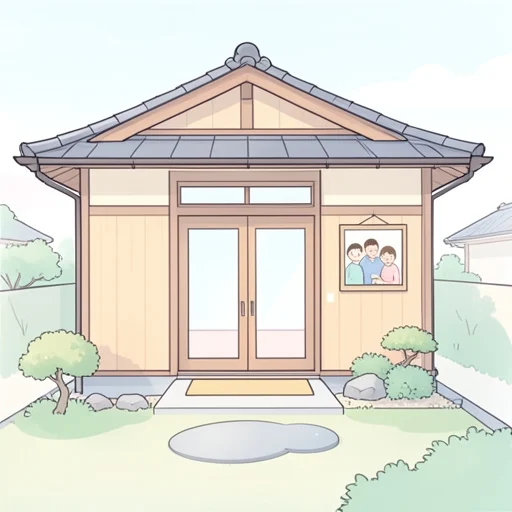
What does 実家 mean? It means one's parents' home, the house where one grew up and considers the family base; it denotes the family residence as opposed to the speaker's current home and is often used when talking about returning, visiting, or discussing upbringing.
Main meanings
- Parental home: the house where one's parents live or lived, typically the place associated with childhood.
- Usage in conversations: used when talking about visiting or returning to the family home, or describing upbringing.
- Connotations: can imply nostalgia, familial obligation, or a sense of origin.
How to use it
Used in casual and polite speech to refer to one's parental home. It is commonly used with verbs like 帰る to indicate going back to the family residence, and it contrasts with 自宅 when speaking about one’s own home; appropriate in discussions of childhood, family visits, and hometown context.
Variants and close terms
- 生家 (なまいえ) — natal home
- 親の家 (おやのいえ) — parents' home
- 自宅 (じたく) — one's own home; used to contrast with 実家
Composition
- 実: real, true, fruit
- 家: house, home, family
- 합성: 実家 refers to the family home as the real/home of one's upbringing
Etymology
実 じつ on'yomi; 家 いえ kun'yomi; combined they form 実家, a compound meaning the real/home of one's upbringing.
Word class
Noun (名詞)