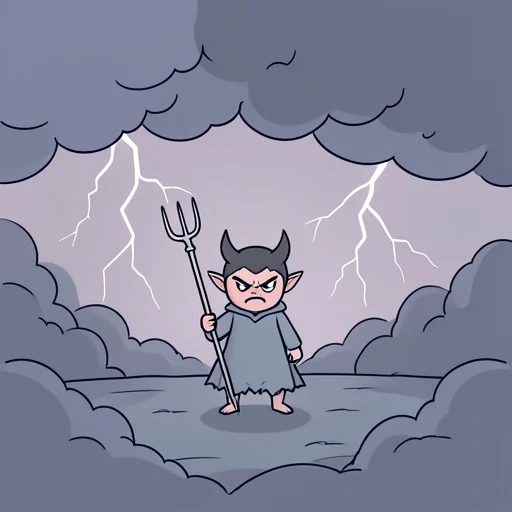
悪魔
Meaning in Englishdevil, demon, evil spirit
Animated kanji stroke order
Related sentences
Related sentences
There are no published items in this section yet.
Word context
What it means
悪魔 refers to a malevolent supernatural being in Japanese usage; it designates an evil, otherworldly entity encountered in religious, mythological, and literary contexts, and can be used metaphorically to describe a wicked person or force.
Main meanings
- Primary supernatural being: a demon or devil in folklore and religion.
- Metaphorical: a person or force deemed morally wicked or dangerous.
- In modern media: often used to denote malevolent characters or antagonists.
How to use it
Used as a noun in formal religious and mythological contexts, as well as in literary and media language; in everyday speech it can be used metaphorically to criticize someone’s behavior or describe a dangerous or wicked force, and it participates in compound expressions such as 悪魔の— to indicate possession or association.
Variants and close terms
- 魔物 (mamono) — mamono
- 魔人 (majin) — majin
- 鬼 (oni) — oni
- 邪悪な存在 (jaaku na sonzai) — jaaku na sonzai
- 悪霊 (akuryou) — akuryou
Composition
- 悪 = evil
- 魔 = demon, spirit, magic
- 합성 meaning evil demon
Etymology
悪 meaning evil; 魔 meaning demon or magic; the compound 悪魔 is a Sino-Japanese formation and the pronunciation akuma comes from the kun readings of the component kanji to yield a native-sounding compound.
Origin
The concept entered Japanese through Chinese Buddhist texts; the compound appeared in classical Japanese literature under strong Chinese influence and became common in religious, literary, and popular usage from the Heian period onward, later expanding with Western demonology in modern media.
Word class
noun (名詞)