Word
損得
Meaning in Englishloss and gain, advantage and disadvantage
Animated kanji stroke order
Sentence
Related sentences
Related sentences
There are no published items in this section yet.
Word context
What it means
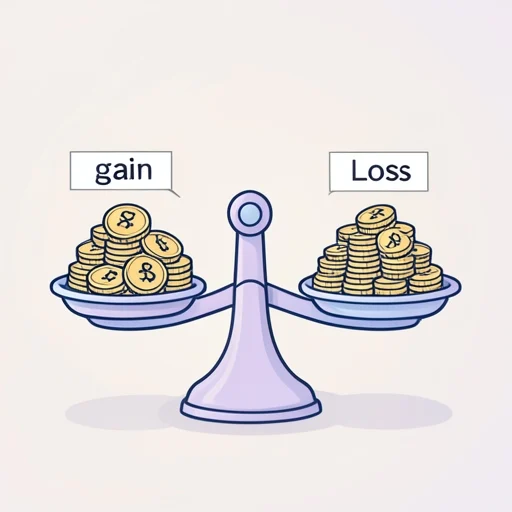
損得 means the balance of loss and gain, referring to the net outcome when weighing costs against benefits in a decision or assessment.
Main meanings
- Primary sense: the concept of gains and losses in evaluating outcomes, decisions, or actions.
- Nuance: extends beyond money to moral, practical, or strategic trade-offs in everyday life.
- Common usage: as 損得勘定, the idea of cost-benefit calculation in business or negotiations.
How to use it
Generally used as a noun in both formal and informal contexts to refer to the concept of gains versus losses; it appears in phrases like 損得勘定 and 損得を考える, in discussions of business strategies, negotiations, and everyday decision making.
Variants and close terms
- 損益 — loss and profit; son'eki
- 利益と損失 — profit and loss; rieki to sonshitsu
- 損得勘定 — cost-benefit calculation; sontoku kanjou
Composition
- 損: loss or damage
- 得: gain or profit
Etymology
損 loss; 得 gain; the compound sontoku merges these opposing concepts into a single noun that denotes the overall result of a choice.
Word class
Noun (名詞)
Word
Related words by kanji and components
Kanji