新幹線
Meaning in Englishbullet train
Animated kanji stroke order
Related sentences
Related sentences
There are no published items in this section yet.
Word context
What it means
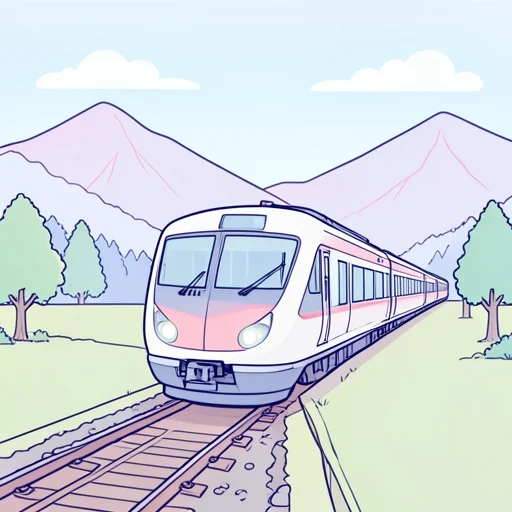
新幹線 (shinkansen) means Japan's high-speed rail system and the high-speed trains that operate on it; it denotes both the network of dedicated high-speed lines and the express train services that connect major cities at high speed, widely known internationally as the bullet train.
Main meanings
- As a metonym, refers specifically to a particular service or trainset rather than the whole system (for example when naming a train model or timetable entry).
- Used in commerce and branding to evoke speed and modernity, appearing in product names and popular culture.
- Figuratively used to describe very fast progress or movement in non-transport contexts.
How to use it
Used in travel contexts (tickets, timetables, station announcements), news reporting, and everyday conversation about intercity travel; the term is neutral and appropriate for formal contexts like official schedules as well as casual speech among travelers and commuters.
Variants and close terms
- 特急 (とっきゅう, tokkyū): limited express — slower, fewer stops than ordinary trains but not as fast as shinkansen.
- 高速鉄道 (こうそくてつどう, kōsoku tetsudō): high-speed rail — generic term for high-speed rail systems.
- 普通列車 (ふつうれっしゃ, futsū ressha): local train — antonym in service type, stops at every station.
Composition
- 新 (shin) = new, recent.
- 幹 (kan) = trunk, main (as in main line or principal artery).
- 線 (sen) = line, track.
- The three characters together literally denote a "new main line," describing a dedicated principal railway line.
Etymology
新幹線 (shinkansen) is a modern Japanese compound formed by combining Sino-Japanese (on'yomi) readings of three characters to create a single technical term; the pronunciation follows standard on-yomi compounding patterns rather than being a loanword.
Origin
The concept and name emerged in postwar Japan: planning began in the 1950s and the first line, the Tōkaidō Shinkansen linking Tokyo and Osaka, opened in 1964 ahead of the Tokyo Olympics, marking a major technological and social milestone and leading to subsequent nationwide expansion.
Word class
noun (名詞)