映画館
Meaning in Englishmovie theater, cinema
Animated kanji stroke order
Related sentences
Related sentences
There are no published items in this section yet.
Word context
What it means
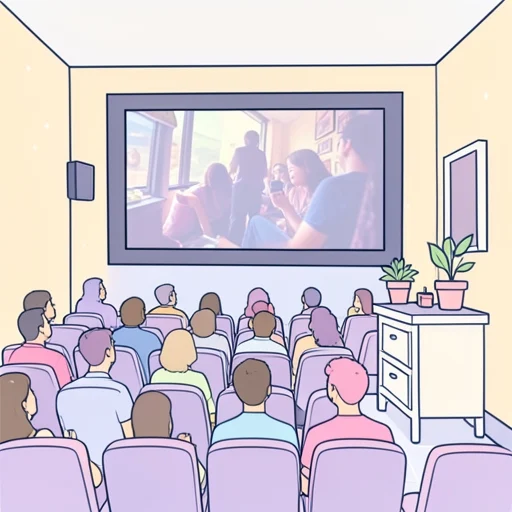
It denotes a public, commercial venue where motion pictures are presented on a large screen for paying audiences; 映画館 (eigakan) functions as the organized space for scheduled screenings, ticketing, and projection, ranging from single-screen halls to modern multiplexes and specialty repertory venues.
Main meanings
- 1. As a commercial organization or chain name used in marketing and ticketing contexts rather than a single physical room.
- 2. Metonymically, the activity of going to see films or the experience of watching films in a communal setting.
- 3. The specific auditorium or hall inside a larger complex (useful when a complex has multiple screening rooms).
- 4. A licensed exhibition venue referenced in legal, administrative, or event contexts such as film festivals or premieres.
How to use it
Used in both casual and formal speech as a neutral noun to identify a theater building, appear on signage, schedules, tickets and in news headlines; speakers combine it with location names, numerical counters, or business names to specify a particular venue or screening and it is commonly used in everyday conversation about leisure plans as well as in industry contexts.
Variants and close terms
- シネマ (shinema): cinema — loanword often used in names and branding
- 劇場 (gekijō): theater — broader term covering stage and film venues
- シアター (shiātā): theater — stylistic borrowed term used for boutique or themed venues
Composition
- 映 (ei): to project, reflect; associated with images and projection.
- 画 (ga): picture, drawing; denotes visual imagery and film.
- 館 (kan): building, hall; indicates a public facility or institution.
Origin
Cinema technology arrived in Japan in the late 19th century with public screenings beginning in the 1890s; dedicated 映画館 (eigakan) emerged in the early 20th century and grew rapidly through the Taishō (Taishō) and Shōwa (Shōwa) eras, becoming a central part of urban leisure life and later evolving into multiplex chains and specialized arthouse venues in the postwar decades.
Word class
noun (名詞)