相撲
Meaning in Englishsumo wrestling
Animated kanji stroke order
Related sentences
Related sentences
There are no published items in this section yet.
Word context
What it means
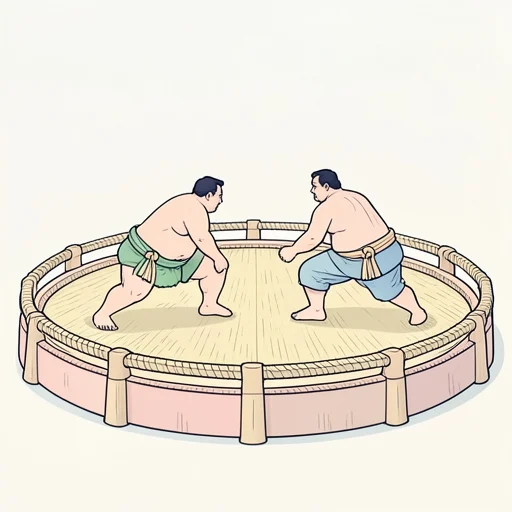
相撲 means sumo: Japan's traditional form of full-contact competitive wrestling in which two competitors attempt to force the other out of a circular ring or to make any part of the opponent other than the soles of the feet touch the ground; it is both a codified sport with professional rankings and a cultural ritual with prescribed rituals, attire and match procedures.
Main meanings
- Used to refer to an individual bout or match within the sport, focusing on the contest itself rather than institutions around it.
- Can denote the professional world or industry of sumo athletes, stables and tournaments as a social system.
- Appears in cultural or ritual contexts to emphasize Shinto-derived ceremonial aspects rather than competition.
- Used metaphorically in Japanese to describe any large-scale contest, showdown, or clash of powerful forces.
How to use it
The word is used across media, conversation and formal reporting to talk about tournaments, athletes, training and cultural performances; it appears in neutral and formal registers such as news headlines and program listings as well as casual speech when referring to matches, tourist demonstrations, or the sumo world generally.
Variants and close terms
- 力士 (りきし, rikishi) — sumo wrestler
- 相撲取り (すもうとり, sumotori) — colloquial term for a sumo wrestler
- 土俵 (どひょう, dohyo) — the sumo ring or arena
- レスリング (resuringu, wrestling) — Western-style wrestling, often contrasted with sumo
- 番付 (ばんづけ, banzuke) — ranking list used in professional sumo
Composition
- 相 (sou / ai) — "mutual," "together," or "appearance," conveying interaction between opponents.
- 撲 (boku) — "strike," "hit," or "beat," evoking physical impact; together the characters suggest mutual striking or physical contest and are used as an ateji to represent the concept of wrestling.
Etymology
相撲 developed phonetically from Old Japanese verb forms such as すまふ (sumafu), later すまひ (sumahi), which contracted over time to すもう (sumo), the modern pronunciation.
Origin
Sumo originated in ancient Japan as a ritualized form of combat linked to Shinto ceremonies recorded in Nara and Heian period chronicles; it evolved through medieval and early-modern periods into organized bouts and, by the Edo period, into the professional-style tournaments and stable system that laid the groundwork for the modern sport.
Word class
noun (名詞)