神社
Meaning in EnglishShinto shrine
Animated kanji stroke order
Related sentences
Related sentences
There are no published items in this section yet.
Word context
What it means
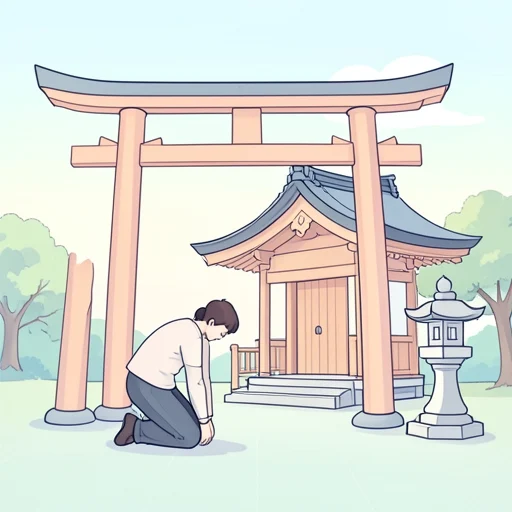
神社 (jinja) means a Shinto shrine: a dedicated religious site in Japan where Shinto kami (kami) are enshrined and people go to perform rituals, offer prayers, and celebrate festivals; the term covers the sacred buildings, the shrine precinct, and the associated practices and ceremonies connected to Shinto worship.
Main meanings
- Refers to the administrative or organizational body that manages shrine affairs and rituals rather than only the physical buildings.
- Used metonymically to indicate a shrine's precinct or specific buildings (main hall, auxiliary halls) as distinct parts of the whole complex.
- Appears in place names and addresses to mark locations historically or culturally linked to a shrine.
How to use it
Used to name and refer to physical shrine sites, their institutions, and events (for example seasonal festivals, rites of passage, and New Year visits); appears in speech and writing from casual conversation ('I'm visiting the shrine') to formal contexts (reports, historical descriptions); also used in addresses, guidebooks, tourist signage, and legal or organizational names tied to a shrine.
Variants and close terms
- 神宮, jingū — grand shrine, often of imperial significance
- お社 / 社, o-yashiro / yashiro — archaic or polite term for a shrine
- 寺, tera / otera — Buddhist temple (different religious institution, often contrasted with shrines)
Composition
- 神 (jin / kami): deity, spirit, divine being — denotes the sacred entity being venerated.
- 社 (sha / yashiro): shrine, company, or communal shrine space — denotes the physical or institutional place for worship.
- Together they form a compound meaning 'a place or institution for deities,' i.e., a shrine where gods are enshrined and worshipped.
Etymology
神社 (jinja) derives from combining Sino-Japanese on-readings: 神 (jin) + 社 (sha), where historical phonological voicing produces the pronounced sequence jin-ja; this reflects standard compound-reading practices in Japanese rather than a native lexical origin.
Origin
Places of local deity worship existed in ancient Japan (Yayoi and Kofun periods) as natural or simple structures; over centuries these cult sites became formalized into permanent shrine complexes with defined architecture and priestly roles, developing through the Nara and Heian periods into the institutional Shinto shrines recognized today and later shaped by state policies in the Meiji era.
Word class
noun (名詞)