Word
重い
Meaning in Englishheavy
Animated kanji stroke order
Sentence
Related sentences
Related sentences
There are no published items in this section yet.
Word context
What it means
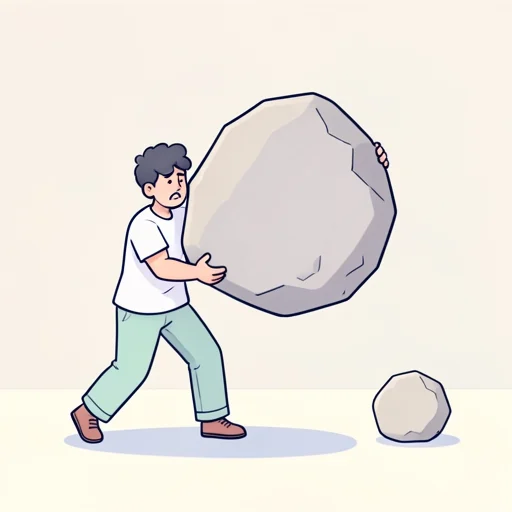
重い means heavy or weighty; it describes something difficult to lift as well as figurative heaviness such as burden, gravity, or seriousness in a situation.
Main meanings
- Physical weight: describes tangible objects that are hard to lift or carry.
- Figurative weight: conveys seriousness, gravity, or importance of a matter.
- Emotional or mental heaviness: expresses a heavy feeling or fatigue affecting mood or energy.
- In compounds or set phrases to indicate burden or cumbersome conditions.
How to use it
Used across casual and formal contexts to describe physical heaviness or abstract heaviness such as burden or seriousness; it directly modifies nouns or appears in predicative constructions, and it can express personal state and conditions with phrases like 心が重い.
Variants and close terms
- 軽い (karui) — light
- 重たい (omotai) — heavier or emphatic variant (same core meaning, more forceful)
- 重大な (juudai na) — serious/important (related nuance)
Composition
- 重: primary meaning is heavy; used in compounds to signify weight, heaviness, or importance
- い: i-adjective ending that marks the word as a descriptive attribute
Origin
Origin: The sense of heaviness is ancient in Japanese; the kanji 重 was borrowed from Chinese and became common in classical texts, with the modern i-adjective form established through historical language development.
Word class
adjective (い-adjective)
Word
Related words by kanji and components
N2
重役
juuyaku
director, high executive
N2
重量
juuryou
heavyweight
N2
重力
juuryoku
gravity
N3
重視
juushi
emphasis, importance, valuing
N3
重体
juutai
serious condition, critical condition
N3
重大
juudai
serious, important,重大
N3
重要
juuyou
important, essential, significant
N3
慎重
shinchou
careful, prudent, cautious
N3
重なる
kasanaru
overlap, pile up, coincide
Kanji