障子
Meaning in Englishpaper sliding door
Animated kanji stroke order
Related sentences
Related sentences
There are no published items in this section yet.
Word context
What it means
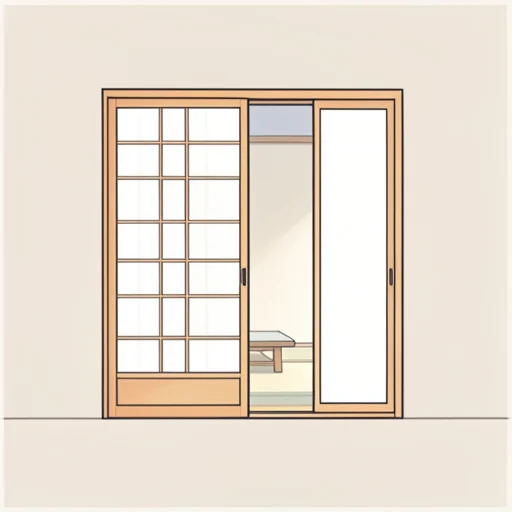
障子 (shoji) means a traditional Japanese sliding panel consisting of a wooden lattice frame covered with translucent paper that functions as a room divider and light diffuser; it is designed to slide on a track to open or close interior spaces while admitting soft, filtered daylight and preserving privacy.
Main meanings
- 1. The thin translucent paper used to cover the lattice panels, treated as a material in woodworking and interior restoration.
- 2. A figurative veil or thin barrier — used metaphorically to describe something that obscures or softens perception.
- 3. Modern adaptations and products inspired by the form (for example, glass or fabric panels called “shoji-style” used in contemporary interiors).
How to use it
Found primarily in traditional tatami rooms, ryokan (inns), and temples as sliding partitions, shoji are used to divide space, control light, ventilate, and create a visual connection between rooms and gardens; they appear in both formal and casual contexts and have modern variants in contemporary housing and interior design that preserve the light-filtering function while replacing paper with glass or synthetic materials.
Variants and close terms
- 襖 (fusuma), opaque sliding panel used as a room divider
- 引き戸 (hikido), general term for sliding door
- 障子紙 (shoji-gami), shoji paper used to cover panels
- 格子戸 (koshido), lattice-style door or window
Composition
- 障 (shō): to obstruct, block, or serve as a barrier — denotes the blocking/partitioning function of the panel.
- 子 (ji): common suffix meaning child or small object, used here as a nominalizing suffix to form the name of the panel.
Origin
The shoji emerged as part of evolving Japanese residential architecture from influences on movable screens and partitions; by the Heian to Muromachi periods sliding paper panels became common in elite and then ordinary homes, maturing through Edo period construction techniques and the widespread use of handmade washi paper for interior lighting control.
Word class
noun (名詞)