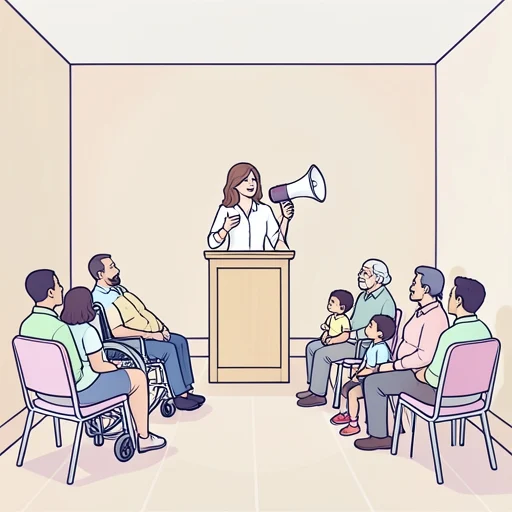
彼女は弱い立場の人々のために声を上げて活動してる
Meaning in EnglishShe speaks up for the weaker
Animated kanji stroke order
Word
Words found in the sentence
Kanji
Related kanji
N3
彼
hi / kare, kano, ka.no
he, that, the
N5
女
jo, nyo, nyou / onna, me
woman, female, femme
N2
弱
jaku / yowa.i, yowa.ru, yowa.maru, yowa.meru
weak, frail, faible
N4
立
ritsu, ryuu, rittoru / ta.tsu, -ta.tsu, ta.chi-, ta.teru, -ta.teru, ta.te-, tate-, -ta.te, -da.te, -da.teru
stand up, rise, set up
N4
場
jou, chou / ba
location, place, lieu
N5
人
jin, nin / hito, -ri, -to
person, être humain, personne
N3
声
sei, shou / koe, kowa-
voice, voix, voz
N5
上
jou, shou, shan / ue, -ue, uwa-, kami, a.geru, -a.geru, a.garu, -a.garu, a.gari, -a.gari, nobo.ru, nobo.ri, nobo.seru, nobo.su, tatematsu.ru
above, up, au-dessus
N3
活
katsu / i.kiru, i.kasu, i.keru
lively, resuscitation, being helped
Grammar
Related grammar structures
N4
〜ために
tame ni
Indicates purpose goal or reason, attaches to a verb or noun, means in order to do or because of something
N5
〜ている
te iru
Indicates ongoing action, continuous state, repeated habit, or resulting condition depending on context
N4
〜し
shi
Indicates multiple reasons or qualities, connects clauses or adjectives, means besides that, and also
N5
〜を
o
Marks the direct object of an action, appears before the verb, shows what receives the action
N5
〜に
ni
Indicates destination, target, arrival point, specific time, or person receiving an action
N5
〜の
no
Indicates possession, relation between nouns, nominal explanation, or turns a verb into a noun phrase
N5
〜は
wa
Marks the topic of the sentence, indicates what the sentence is about, can contrast with another element, organizes main information