土木
Meaning in Englishpublic works
Animated kanji stroke order
Related sentences
Related sentences
There are no published items in this section yet.
Word context
What it means
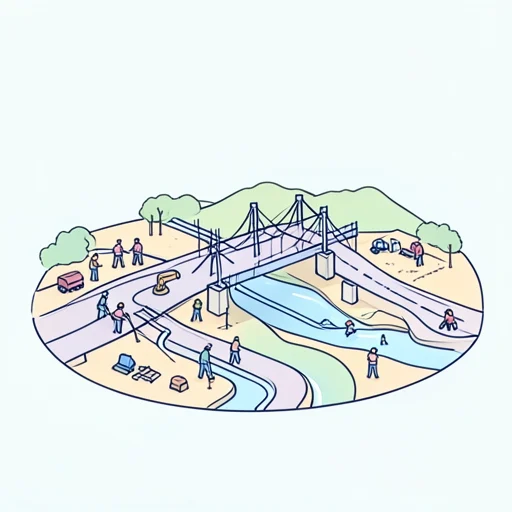
土木 means civil engineering—the professional field focused on the design, construction, and maintenance of infrastructure such as roads, bridges, water systems, and other public works.
Main meanings
- Civil engineering as a discipline that encompasses infrastructure projects and public works.
- The field or department within organizations (for example universities or municipal bodies) that concentrates on land and water-related construction activities.
How to use it
Formal and technical contexts use 土木 in education, government, and industry; common compounds include 土木工学, 土木技術, 土木部, and 公共事業; in casual speech the bare term is less frequent and mainly seen in specialized discussions or institutional names.
Variants and close terms
- 土木工学 (doboku-kougaku) — civil engineering in academic contexts
- 建設工学 (kensetsu-kougaku) — construction engineering, used in related fields
- 公共事業 (koukyou jigyou) — public works, related concept
Composition
- 土 earth, ground; used here to indicate ground-related construction and earthworks
- 木 wood, timber; signals timber-related construction elements in infrastructure
- Together 土木 refers to construction that shapes or utilizes the earth and timber components in public works projects
Origin
The term emerged in historical Japan to denote public works activities involving ground preparation and related construction; during modernization in the Meiji period the field was formalized as civil engineering and integrated into technical education and government planning.
Word class
noun (名詞)