座布団
Meaning in Englishcushion (Japanese)
Animated kanji stroke order
Related sentences
Related sentences
There are no published items in this section yet.
Word context
What it means
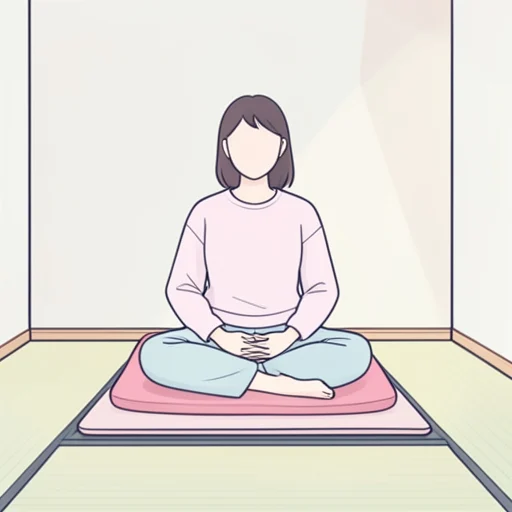
The Japanese word 座布団 (zabuton) means a flat, padded cushion used for sitting on the floor; it provides soft support for people sitting in traditional postures and is a common household and ceremonial furnishing in Japan.
Main meanings
- As a symbolic award or point in comedy and variety shows, where receiving a 座布団 (zabuton) signals approval or a successful joke.
- As an object famously thrown by spectators in sumo arenas to show strong displeasure or protest.
- Occasionally used figuratively to mean a small comfort or margin—similar to the English idea of a "cushion" for support or buffer.
How to use it
Commonly placed on tatami or wooden floors in homes, temples, and traditional restaurants for seiza or cross-legged sitting; used by performers such as rakugo storytellers and by guests at low tables; appears in both casual domestic settings and formal contexts where polite language (e.g., the honorific お座布団 (ozabuton)) may be used.
Variants and close terms
- クッション (kusshon) — cushion (loanword, broader modern usage).
- お座布団 (ozabuton) — polite/honorific form of 座布団 (zabuton).
- 椅子 (isu) — chair (conceptual opposite: raised seating instead of floor seating).
Composition
- 座 (za) — sit, seat; denotes sitting or a place to sit.
- 布 (fu or nu) — cloth, fabric; indicates a textile material.
- 団 (dan) — group, bundle; here it conveys a lumped or padded form.
Origin
Floor cushions for sitting have deep roots in Japan’s tatami-based interior culture; the specific padded cushion called 座布団 (zabuton) became widespread in everyday homes and teahouses by the Edo period (1603–1868) as extended floor-sitting became the norm and specialised padded seats were developed.
Word class
noun (名詞)