弁当
Meaning in Englishbox lunch
Animated kanji stroke order
Related sentences
Related sentences
There are no published items in this section yet.
Word context
What it means
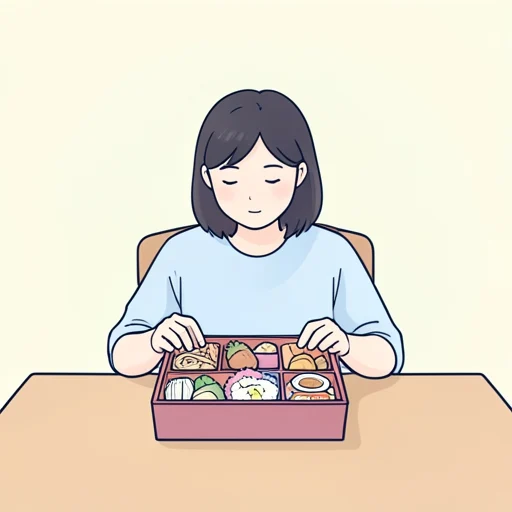
弁当 (bento) means a single-serving packed meal prepared to be eaten away from home; it typically features a balanced arrangement of rice (or other staple), a main protein and several small side dishes placed together for convenience and portioning.
Main meanings
- 1. The reusable container that holds a packed meal (the lunchbox itself), distinguished from the food it contains.
- 2. Pre-prepared, ready-to-eat boxed meals produced for sale, often curated by shops or manufacturers with regional styles and set portions.
- 3. Names for distinctive styles or assortments (e.g., layered, compartmentalized or decorative presentations) that vary by region and occasion.
How to use it
Prepared at home or assembled for outings, bento are commonly taken to school, workplaces, picnics and seasonal events; speakers often use the polite form お弁当 (o-bento) in conversation and the item figures in daily routines, from a child’s school lunch to an adult’s packed office meal or a family outing provision.
Variants and close terms
- お弁当 (o-bento) — polite form used in speech and written etiquette.
- 弁当箱 (bentō-bako) — the reusable lunchbox/container for holding a bento.
- 幕の内弁当 (makunouchi bentō) — a traditional assortment-style bento with several small dishes.
- 昼食 (chuushoku) — general term for lunch sometimes used interchangeably in formal contexts.
Composition
- 弁 (ben) originally conveys notions of distinction, speech or an assigned portion and is used in compounds to mark an allocated item.
- 当 (tō) means appropriate, to hit or to be assigned; combined the characters suggest an allotted or fitted portion, reflecting the idea of a portioned meal.
Origin
Portable single-portion meals trace back to medieval Japan as food for travelers, hunters and soldiers; the practice of arranging individual boxed meals became widely popular in the Edo period with urban culture and theatergoing, and commercialization expanded in the Meiji era with railway travel and the rise of station-specific boxed meals, helping bento become a national staple.
Word class
noun (名詞)