桜
Meaning in Englishcherry blossom, cherry tree
Animated kanji stroke order
Related sentences
Related sentences
There are no published items in this section yet.
Word context
What it means
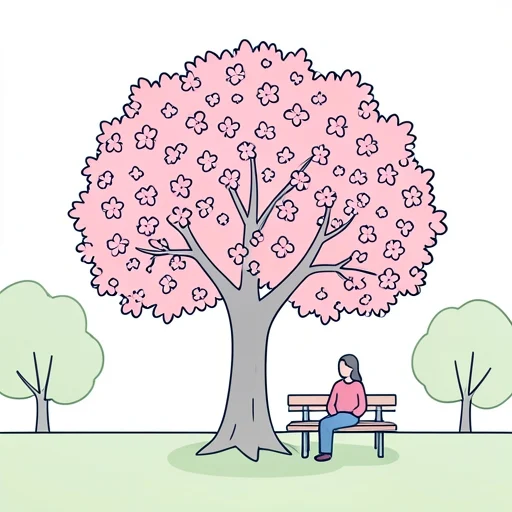
桜 refers to the cherry blossom tree and its blossoms, a defining spring symbol in Japan; the term is used to describe both the flowers and the season in natural description, poetry, and everyday language.
Main meanings
- Ephemeral beauty and the fleeting nature of life, central to hanami imagery
- Seasonal marker for spring in Japan and in tourism branding
- Used in literature, poetry, and pop culture to evoke elegance and renewal
How to use it
Used in natural descriptions of spring, in travel and nature writing, poetry, and everyday speech; formal contexts describe the flowering tree and season, while casual speech often mentions sakura in relation to spring events and imagery.
Variants and close terms
- 河津桜 (Kawazuzakura) — an early-blooming cultivar
- 桜色 (sakurairo) — cherry blossom pink color
- 桜前線 (sakura zensen) — the cherry blossom front, indicating bloom progression
Composition
- 木 radical indicates a tree; 央 provides the phonetic cue and part of the semantic idea of central beauty, combining to name the cherry blossom tree
Etymology
桜 is the simplified form of 櫻 (sakura), introduced in modern script reforms to reduce strokes; the left component 木 signals a tree, while the right component provides a phonetic cue for the word.
Origin
From ancient Japan, the blossoms were celebrated in classical poetry and court culture, with hanami traditions expanding and spreading, becoming a national-seasonal ritual by the Edo period.
Word class
Noun (名詞)