横断
Meaning in Englishcrossing, traversing
Animated kanji stroke order
Related sentences
Related sentences
There are no published items in this section yet.
Word context
What it means
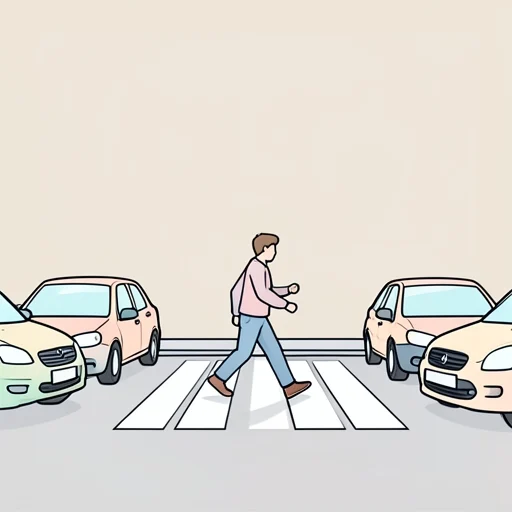
横断 means the act or instance of crossing from one side to another, typically referring to crossing a street, river, or border. It is used as a noun and can be combined with する to form 横断する, meaning to cross or traverse. In traffic contexts it appears in safety and driving-related discourse.
Main meanings
- Describes the act of moving from one side to the other in a physical space such as a street, river, or border.
- In traffic contexts, refers to crossing areas and the concept of pedestrians crossing, often appearing in regulatory language and signage.
- Metaphorical or cross‑domain usage, indicating spanning across disciplines, cultures, or geographic boundaries.
How to use it
横断 is used both in speech and formal writing. As a noun, it denotes the crossing itself; as a verb, 横断する expresses the act of crossing. In safety, transport, and academic writing it appears with combinations and in phrases describing how to navigate across spaces or boundaries.
Variants and close terms
- 渡る (wataru) — cross; Romaji: wataru
- 跨ぐ (matagu) — to span, cross; Romaji: matagu
- 横断歩道 (ōdan hodō) — pedestrian crossing; Romaji: ōdan hodō
Composition
- 横: horizontal, side
- 断: cut, sever
- Combination conveys moving across a boundary from one side to the other, yielding the core sense of crossing.
Etymology
On'yomi: ōdan; The compound uses the Sino-Japanese readings of 横 and 断, typical of Sino-Japanese compounds; Phonetic evolution: The pronunciation has remained stable in modern Japanese, with a long vowel indicated by the macron in ō.
Word class
Noun; Suru-verb (横断する)