止める
Meaning in Englishstop, quit, end
Animated kanji stroke order
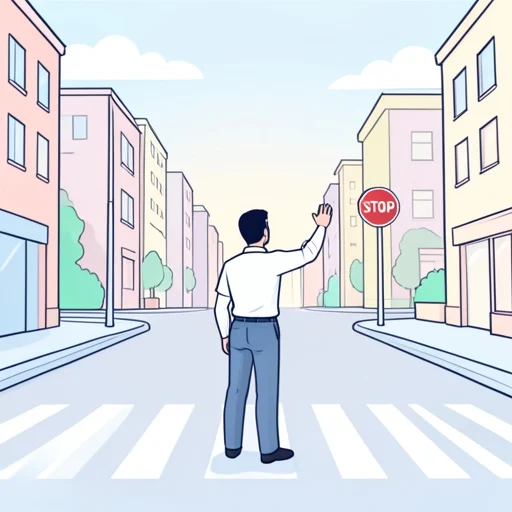
Related sentences
Related sentences
There are no published items in this section yet.
Word context
What it means
止める (tomeru) means to cause something to cease motion or activity; it is the transitive verb used when an agent brings a movement, process, device, or action to an end.
Main meanings
- Bring a moving object to a halt (e.g., stop a vehicle or person in motion).
- Park or bring a vehicle to rest (common in everyday speech for cars and bikes).
- Turn off or cut the supply to a device, service, or utility.
- Prevent or stop someone from doing something (intervene or obstruct an action).
- Detain or arrest in legal or policing contexts.
- In some contexts (written with other kanji) mean to fasten, fix in place, or retain an item.
How to use it
Used across spoken and written Japanese when an agent stops something; grammatically it commonly appears as Xを止める (X o tomeru) where X is the direct object. It appears in casual and polite registers (e.g., plain tomeru vs polite tomemasu) and pairs with intransitive counterparts for contrast; speakers choose different kanji forms to emphasize nuance (motion vs fastening) and select polite forms in formal situations.
Variants and close terms
- 止まる (tomaru) — to stop (intransitive)
- やめる (yameru) — to quit, cease doing (often used for stopping activities or habits)
- 留める (tomeru) — to fasten, keep in place (same reading, different nuance)
- 停める (tomeru) — often used specifically for parking or stopping vehicles
- 中止する (chuushi suru) — to cancel (formal)
- 始める (hajimeru) — to begin (antonym)
Composition
The word is written with the kanji 止 meaning "stop" or "cease" followed by the okurigana める which creates the transitive verb form; the kanji conveys the core semantic concept while the okurigana signals verb conjugation and transitivity.
Etymology
止める (tomeru) traces to an Old Japanese root *tom- meaning "stop," with the modern transitive form formed by the verbal ending -eru; the stem has remained phonologically stable from classical forms into modern Japanese.
Word class
verb, transitive (他動詞, 一段)