洗う
Meaning in Englishto wash
Animated kanji stroke order
Related sentences
Related sentences
There are no published items in this section yet.
Word context
What it means
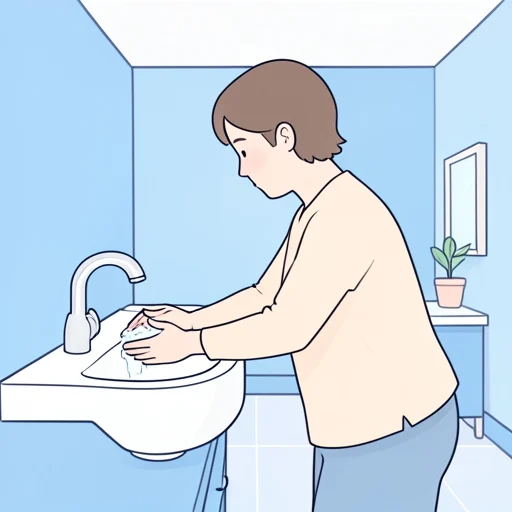
洗う means to wash or cleanse something with water or another liquid, covering cleaning objects, surfaces, or the body; it also extends to figurative cleansing such as clearing away dirt, residues, or problems.
Main meanings
- Physical cleaning of objects, clothing, dishes, or surfaces using water or a cleaning liquid
- Washing oneself or parts of the body for hygiene
- Rinsing or removing residue by liquid, often in stepwise actions
- Figurative cleansing sense, including clearing away stains, doubts, or metaphorically washing away problems
How to use it
As a transitive verb, 洗う expresses cleaning with liquid and is used across registers; polite speech uses 洗います, casual speech uses 洗う; it takes a direct object marked by を, and covers cleaning dishes, clothes, bodies, or objects, as well as routine hygiene and broader cleansing tasks.
Variants and close terms
- 洗浄する (senjou suru) – to wash/clean thoroughly
- すすぐ (susugu) – to rinse
- 清める (kiyomeru) – to purify, often ceremonial
- 洗い流す (arainagasu) – to wash away, to rinse off, sometimes metaphorical
Composition
- 洗 = water radical and the component 先; together they evoke cleansing with water
- う = hiragana ending that marks the verb as a godan -u form
Etymology
etimologia The word is a native Japanese verb with kun'yomi arau; the kanji 洗 carries the meaning 'to wash' and is used for semantic representation; historically it appeared in classical Japanese as 洗ふ, where ふ represents the old -u ending; the modern 洗う uses kana spelling and standard pronunciation.
Origin
Old Japanese usage, widespread in classical and medieval periods as a basic domestic action; no specific origin event, the verb reflects everyday cleaning practices from ancient times.
Word class
verb (godan, 五段動詞)