浜辺
Meaning in Englishbeach, foreshore
Animated kanji stroke order
Related sentences
Related sentences
There are no published items in this section yet.
Word context
What it means
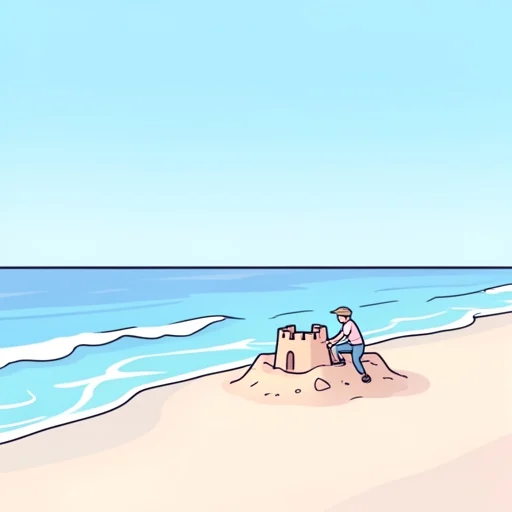
浜辺 means the shore where the land meets the sea, typically a sandy or pebbly area along the coast; it is a common noun used to refer to beaches in everyday Japanese and in descriptive writing.
Main meanings
- beach or seashore—the sandy or rocky edge where land meets the sea
- coastal landscape in literature and media, often associated with leisure or scenic appeal
How to use it
Used as a plain noun in both spoken and written Japanese to denote the beach or seashore; in casual speech it refers to familiar coastal areas, while in formal writing it can describe coastal scenery, settings in narratives, or travel descriptions; it contrasts with broader terms like 海岸 when a wider coastline is meant.
Variants and close terms
- 海辺 (umibe): shore by the sea, close synonym emphasizing the sea-adjacent edge
- 海岸 (kaigan): coast or shore, often broader or geographic rather than a specific sandy beach
- 浜 (hama): a shortened form used in compounds and place names
Composition
- 浜: beach, shore, coastal area
- 辺: edge, boundary, side
Etymology
浜 designates the beach or shore, 辺 means edge or boundary; together they form the concept of the shoreline, with the pronunciation hamabe established for this compound word
Origin
Evidence of 浜辺 appears in classical Japanese literature and coastal region texts, with usage continuing through the Edo period into modern Japanese as the standard term for the beach or shoreline.
Word class
noun (名詞)