Word
渚
Meaning in Englishwater's edge, beach, shore
Animated kanji stroke order
Sentence
Related sentences
Related sentences
There are no published items in this section yet.
Word context
What it means
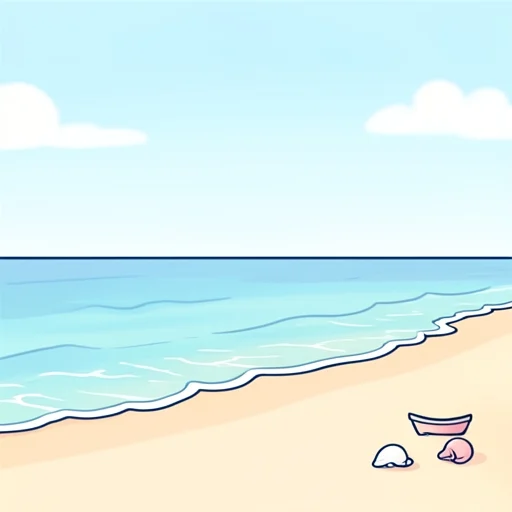
What does 渚 mean? It denotes the seashore—the land at the edge where sea and land meet, used to describe coastal areas, beaches, or the shoreline in geographic and literary contexts.
Main meanings
- The shoreline or coast—the land immediately adjacent to the sea.
- Beaches or coastal scenery described in literature and poetry.
- A scenic or symbolic reference to the meeting point of land and water in prose.
How to use it
Used as a noun in formal, literary, and geographic contexts; in everyday speech it appears mainly in place names and poetic expressions; typical constructions include 渚に, 渚で, 渚の風景.
Variants and close terms
- 浜辺 (はまべ, hamabe) — shore or beach
- 海岸 (かいがん, kaigan) — coast
- 浜 (はま, hama) — shore or beach (short)
- 海辺 (うみべ, umibe) — seashore
Composition
- Left radical 氵 indicates water; the right component conveys a shore or boundary where water meets land, together forming the concept of the seashore.
Etymology
渚 is a native kanji whose form combines the water radical with a semantic element denoting a shore; the kun-reading nagisa developed as the common spoken pronunciation.
Origin
Used since classical Japanese; appears in Heian-era poetry and later prose to describe coastal landscapes.
Word class
Noun (名詞)
Kanji