発車
Meaning in Englishdeparture of a vehicle
Animated kanji stroke order
Related sentences
Related sentences
There are no published items in this section yet.
Word context
What it means
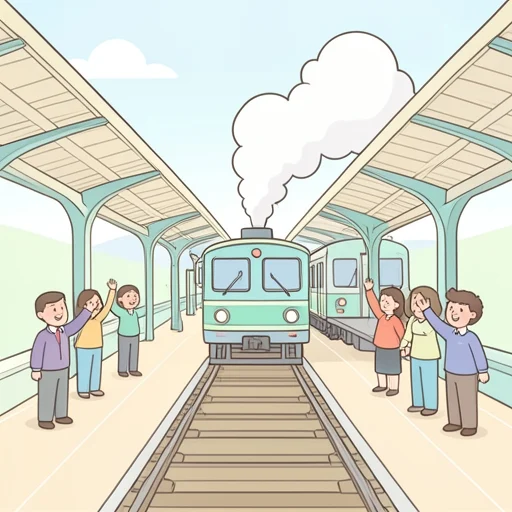
発車 means the departure of a vehicle, the moment a train, bus, or other vehicle leaves a stop and begins to move. It is a noun that can take する to form 発車する, a verb used in transport contexts to describe the act of leaving a station or starting to move.
Main meanings
- The departure of a vehicle from a station or stop, commonly seen in timetables and announcements.
- The moment a vehicle begins to move, with the engine starting and wheels turning.
- Metaphorically, the start of an operation or service in formal contexts, though this usage is less common.
How to use it
Used in transportation contexts such as railway and bus operations, signage, and travel writing; appears with 発車する to describe the act verb-ally in formal or semi-formal language; in casual talk, 出発する is also common when referring to trips not bound to a vehicle.
Variants and close terms
- 出発 (しゅつぱつ, shuppatsu) – broader departure, not limited to vehicles.
- 発進 (はっしん, hasshin) – start moving, especially for machinery or engines.
- 発車する (はっしゃする, hassha suru) – to depart (verb form derived from the noun).
Composition
- 発 — to start, to emit; contributes the sense of initiation.
- 車 — vehicle or cart; denotes the object whose departure is described.
Etymology
発 indicates starting or emitting, while 車 means vehicle; together they form 発車 read はっしゃ, a compound noun. The phonology shows rendaku and gemination, turning はつ + しゃ into はっしゃ in modern Japanese.
Word class
Noun (suru-verb)