盾
Meaning in Englishshield
Animated kanji stroke order
Related sentences
Related sentences
There are no published items in this section yet.
Word context
What it means
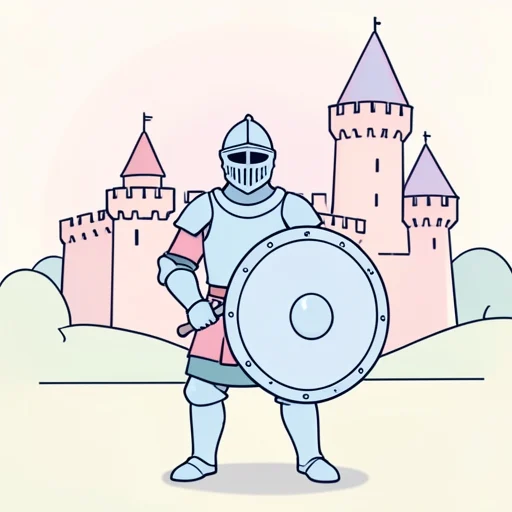
盾 (tate) means a shield — a physical object used to block attacks or, by extension, any person, object, or measure that provides protection or defense against harm or criticism.
Main meanings
- 1) A hand-held defensive device used in combat or ceremonial display.
- 2) A figurative protector: a person or policy that shields someone or something from harm, liability, or blame.
- 3) A legal, financial, or rhetorical 'shield'—any mechanism used to deflect risk or responsibility.
- 4) Appears in idiomatic and compound uses where the idea of protection is extended or contrasted with opposing forces.
How to use it
Used both literally (talking about a physical shield in historical, martial, or museum contexts) and figuratively (describing someone who protects another, a policy that shields an entity, or a corporate/legal structure that blocks liability); appears in casual speech, journalism, legal/business language, and literary/metaphorical contexts, with register varying by context from everyday conversation to formal documents.
Variants and close terms
- シールド (shiirudo) — loanword 'shield' (katakana).
- 防御 (bougyo) — 'defense' (conceptual synonym).
- 矛 (hoko) — 'spear' (conceptual antonym; historically paired with 盾 in idioms).
Composition
The kanji 盾 is a single-character pictograph representing a hand-held shield; its strokes outline the shield’s face and handle, so the character itself names the object directly rather than combining multiple separate kanji elements into a compound.
Origin
The material object and the word for shield existed in ancient Japan; while large shields were less central in later samurai warfare (where armor and polearms dominated), small shields and the concept survived in earlier military contexts, ceremonial use, and as a long-standing metaphor for protection in literature and official records.
Word class
noun (名詞)