空
Meaning in Englishsky
Animated kanji stroke order
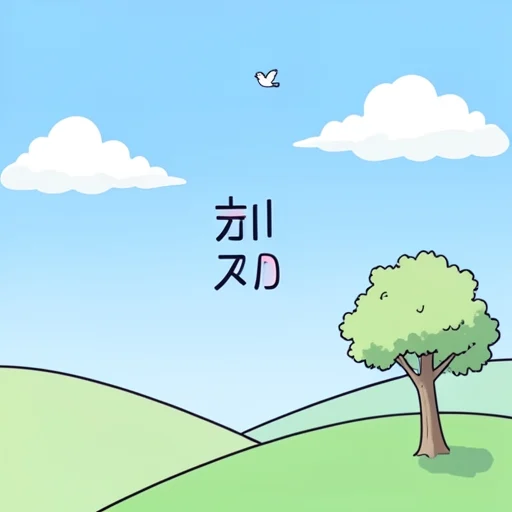
Related sentences
Related sentences
There are no published items in this section yet.
Word context
What it means
What does 空 mean? 空 (sora, kara) refers primarily to the open expanse above the ground in everyday speech and to the state of having nothing inside in other contexts; its exact nuance depends on pronunciation and grammatical role, and it functions both as an independent noun and as a productive element in compound words.
Main meanings
- Air or atmosphere as a substance surrounding living things and filling spaces.
- Vacancy or availability used for seats, time slots, or physical places.
- Philosophical or religious 'void' as in Buddhist notions of lack of inherent existence.
- A technical or numeric notion of null/zero in certain compound terms.
- A figurative sense meaning hollow, insubstantial, or lacking sincere content.
How to use it
The reading sora is common in everyday spoken references to the overhead realm and weather, kara appears in derived forms indicating something unfilled or originating from, and the on-yomi kuu is typical in formal, technical, and compound words such as 空港 (kūkō) and 空気 (kūki); choice of reading depends on register, morphology, and lexical convention.
Variants and close terms
- 空気, kūki, air/atmosphere
- 空港, kūkō, airport
- 空き, aki, vacancy/available space
- 空っぽ, karappo, completely empty
- 虚, utsuro, hollow/void (literary)
Composition
The character is written with the '穴' (cave/roof) element that evokes an enclosed or open-topped space plus internal strokes that historically served phonetic and semantic roles; visually and conceptually the components suggest an unfilled space beneath a roof or opening, which corresponds to its range of meanings.
Etymology
The on readings kuu and ku derive from historical Chinese pronunciations transferred into Japanese with the character, while the kun readings sora and kara are native Japanese assignments; over time phonetic adaptation and regular sound changes produced the modern pronunciations used in speech and compounds.
Origin
The character entered Japan with Chinese writing and Buddhist literature in the early centuries CE; its concrete sense for the overhead expanse grew from everyday observation, while Buddhist texts and philosophical discourse expanded its abstract meaning into notions of 'emptiness' and absence.
Word class
noun (名詞), kanji used in compounds (漢語), both kun-yomi and on-yomi readings