Word
終点
Meaning in Englishterminus, last stop (e.g train)
Animated kanji stroke order
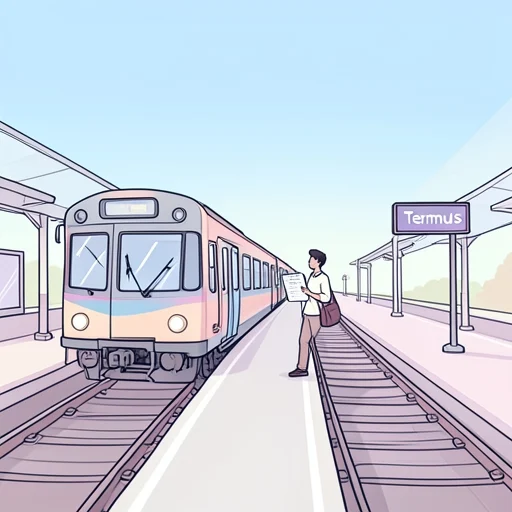
Sentence
Related sentences
Related sentences
There are no published items in this section yet.
Word context
What it means
What does 終点 mean? It denotes the final point on a route, line, or sequence; used for the last stop of a transit line or the ultimate endpoint of a journey, process, or plan.
Main meanings
- terminus of a transit line or route, where service ends — shūten
- the final point within a sequence, such as the last stage of a project or story — shūten
- figurative end point or limit, the point beyond which something cannot proceed — shūten
How to use it
Used in transportation signage and timetables to mark the final stop of a line, in planning to denote the endpoint of a phase, and in diagrams or technical writing to indicate where a sequence concludes; examples include この路線の終点 (Kono rosen no shuuten) and プロジェクトの終点を設定する (Purojekuto no shuuten o settei suru).
Variants and close terms
- 終着点 (しゅうちゃくてん, shuuchakuten) — terminus for transit lines
- 終端 (しゅうたん, shuutan) — terminal in technical contexts
- 末端 (まつたん, matsutan) — far end or tip of a line
Composition
- 終: end, finish; used to denote termination
- 点: point, dot; marks a precise position
- Combined: 終点 refers to the final position or moment on a line, route, or sequence
Etymology
終 (end, finish) and 点 (point); combined they yield 終点, pronounced shūten using on-yomi readings
Word class
Noun (名詞)
Word
Related words by kanji and components
N1
原点
genten
origin (coordinates, starting point)
N1
得点
tokuten
score, points made
N1
観点
kanten
point of view
N1
起点
kiten
starting point
N1
点検
tenken
inspection, examination, checking
N1
点線
tensen
dotted line
N1
終始
shuushi
from beginning to end; consistent(ly)
N1
終日
shuujitsu
all day
N1
盲点
mouten
blind spot
Kanji