花見
Meaning in Englishcherry blossom viewing
Animated kanji stroke order
Related sentences
Related sentences
There are no published items in this section yet.
Word context
What it means
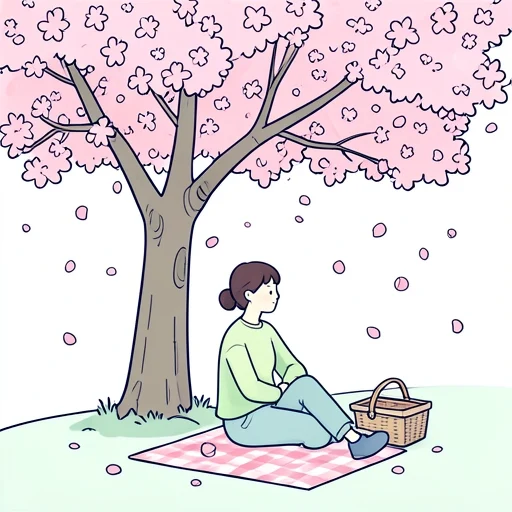
花見 (hanami) means 'flower viewing' — a seasonal Japanese practice of gathering beneath blooming trees to appreciate blossoms while socializing and sharing food and drink; it typically involves picnics in parks or along rivers during the brief flowering period and can include both daytime viewing and illuminated night viewing.
Main meanings
- 1. The organized social event or picnic focused on enjoying blossoms rather than a formal ceremony.
- 2. The act of visiting parks or scenic spots specifically to see flowers during their peak bloom.
- 3. A seasonal reference used to indicate the period when certain flowers (especially cherry blossoms) are in bloom.
- 4. A cultural marker in schedules, tourism, and weather forecasts signaling peak bloom windows.
How to use it
Used broadly in casual and semi-formal contexts to describe going to see flowers, planning parties, or naming seasonal events; people use the word when inviting friends, organizing company or school outings, buying tickets for blossom-viewing tours, or referring to the spring season in everyday conversation and media; it is not a formal ceremonial term but can appear in official event names.
Variants and close terms
- お花見 (ohanami) — polite/honorific form of hanami, often used in invitations.
- 花見会 (hanamikai) — a hanami gathering or organized party.
- 夜桜 (yozakura) — night-time cherry-blossom viewing; a variation focused on illuminated trees.
- 梅見 (umemi) — plum-blossom viewing, a related seasonal practice.
Composition
- 花 (hana) = flower, blossom.
- 見 (mi) = see, view.
Origin
Records of flower-viewing gatherings date back to Japan's classical eras (Nara/Heian), where court poetry and seasonal celebrations praised blossoms; over centuries the practice moved from aristocratic pastimes to popular public picnics, solidifying as a mass social custom by the Edo period and remaining central to spring life in modern Japan.
Word class
noun (名詞)