菓子
Meaning in Englishsweets, confectionery
Animated kanji stroke order
Related sentences
Related sentences
There are no published items in this section yet.
Word context
What it means
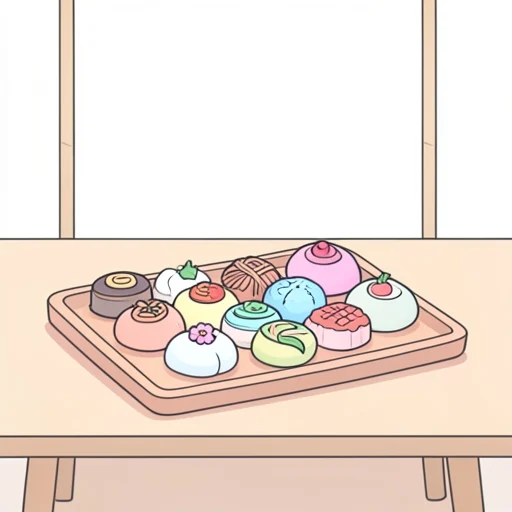
菓子 means sweets or confectionery. It denotes a broad category of edible sweet treats, including candies, pastries, and other desserts, used in everyday Japanese to refer to any sweet snack without specifying traditional forms.
Main meanings
- General category of sweets or confections, including candy, pastries, and desserts
- Used for sweets offered as gifts or served at events and gatherings
- In everyday usage it contrasts with 和菓子 (wagashi) for traditional Japanese sweets and with 洋菓子 (yōgashi) for Western-style confections
How to use it
Used as a general noun for sweet foods in formal and casual contexts; common in menus, shop names, and product labeling; often followed by qualifiers to specify type, such as 和菓子 (wagashi) or 洋菓子 (yōgashi).
Variants and close terms
- 和菓子 (wagashi) — traditional Japanese sweets
- 洋菓子 (yōgashi) — Western-style confections
- お菓子 (okashi) — everyday generic term for sweets; romaji okashi
Composition
- 菓: a character linked to sweets; used in compounds to denote confectionery
- 子: a common nominal suffix forming nouns; in 菓子 it helps turn the concept into a thing that can be eaten
Etymology
菓 historically signals sweets or fruit-related foods; 子 acts as a nominal suffix; the compound is read kashi in modern Japanese.
Origin
菓子 has appeared in classical Japanese texts and markets from early periods; its broad sense expanded in the Edo period with the growth of the confectionery trade, and today it denotes sweets in general.
Word class
Noun (菓子)