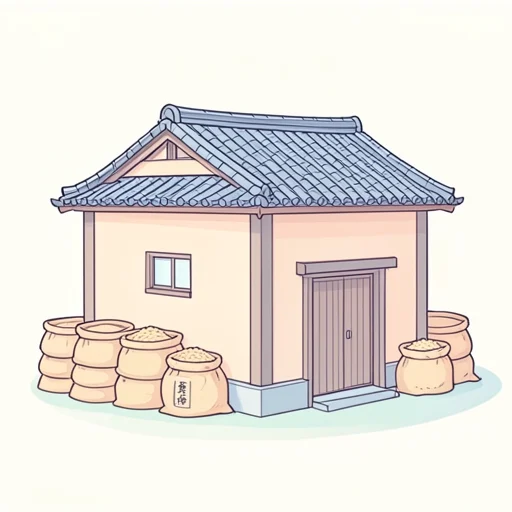
蔵
Meaning in Englishwarehouse, cellar
Animated kanji stroke order
Related sentences
Related sentences
There are no published items in this section yet.
Word context
What it means
蔵 means a repository or building used to hold and protect goods, valuables, records, or other stored items; in modern usage it can refer to both a physical storage space and an abstract repository (e.g., an archive or collection).
Main meanings
- Traditional sake-brewing or storage facility as a distinct place name or trade site, often written as 酒蔵 (sakagura).
- Collection or archive of items such as books or records, often referenced in compounds like 蔵書 (zōsho), meaning a curated private or institutional collection.
- Verbal/nominal compound use meaning "to store, hide, or possess" when used in verbs or Sino-Japanese compounds (e.g., 蔵する (zōsuru)).
- Element in proper names and brand names that evokes tradition, safekeeping, or rarity (used stylistically rather than literally).
How to use it
Used both as an independent noun and as a bound element in compounds and names; appears in literary, commercial, and technical contexts—formal when referring to archives or historical buildings, neutral in place and company names, and occasional figurative use to mean an inner store or hidden reserve; pronunciation can shift between native kura and Sino-Japanese readings like zō depending on the compound.
Variants and close terms
- 倉庫 (sōko) — warehouse, large commercial storage space.
- 納屋 (naya) — shed or barn, smaller rural storage.
- 庫 (ko) — storehouse, often as a bound morpheme.
- 隠し場所 (kakushibasho) — hiding place (conceptual antonym: open/display).
Composition
- The character 蔵 (kura) combines the plant/grass radical 艹 on top with the phonetic/semantic element 臧 underneath; historically the lower component conveyed meanings related to storing or concealing and provides the pronunciation cue, while the top radical is a common classifier in characters related to items or containers.
Origin
Storage buildings for grain and valuables existed in Japan since the Yayoi and Kofun periods; over centuries the dedicated architectural form called 蔵 (kura) evolved, reaching distinctive fireproof, plaster-walled styles in the Edo period when urban wealth and commercial storage needs increased.
Word class
noun / bound morpheme (名詞 / 接尾辞)