赤らむ
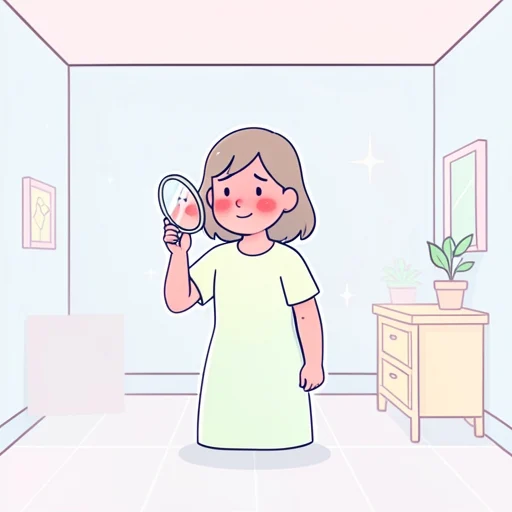
Meaning in Englishto become red, to blush
Animated kanji stroke order
Related sentences
Related sentences
There are no published items in this section yet.
Word context
What it means
赤らむ means to become red or flushed, typically described in literary or poetic Japanese rather than everyday speech; it describes a state of redness in the face or complexion.
Main meanings
- Literary usage describing reddening of the skin or face, often in a poetic or descriptive context.
- Conveys a sense of ongoing redness linked to emotion or heat, rather than a single momentary blush.
- Primarily found in classical or historical prose; modern usage is rare.
How to use it
Used in formal, literary, and historical contexts to describe reddening of the face or skin; not common in everyday speech; typical forms include 赤らむ in its base form and 赤らめる for causative or transitive sense; conjugation follows classical patterns.
Variants and close terms
- 赤らむ (akaramu) — primary classical form; romaji akaramu
- 赤らめる (akarameru) — causative form; romaji akarameru
- 赤面する (sekimen suru) — to blush; romaji sekimen suru
- 紅潮する (kōchō suru) — to redden; romaji kōchō suru
Composition
- 赤 = red, color of blush
- らむ = classical suffix indicating state or conjecture, here forming a verb that denotes becoming red
Etymology
From 赤 meaning red and らむ as a classical auxiliary forming a verb indicating a state; together they express the state of becoming red in a literary register.
Origin
Attested in classical Japanese; used in Heian to Edo period literature to describe physical reddening and emotional blush; today chiefly seen in poetry or historical texts.
Word class
Verb (classical Japanese, intransitive)