農民
Meaning in Englishfarmers, peasants
Animated kanji stroke order
Related sentences
Related sentences
There are no published items in this section yet.
Word context
What it means
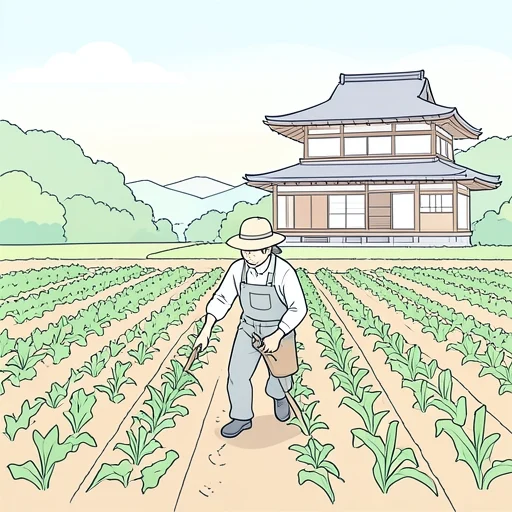
What does 農民 mean? It refers to people who work in agriculture, especially farmers or peasants, typically found in rural settings; the term is used in formal or historical contexts to denote the agrarian segment of society.
Main meanings
- Historical social class representing rural farmers and peasants within an agrarian society.
- A general term for individuals who work in farming or live in the countryside, often seen in academic or formal discourse.
- Conveys a traditional or antiquated tone and may carry social class implications in modern usage.
How to use it
Used in formal, historical, and academic contexts to denote the rural farming population; not common in casual spoken Japanese; appears in historical novels, government reports, and ethnographic writing. 農民 (noumin) is sometimes used in modern texts to refer to peasants in a historical sense; in everyday speech, 農家の人 or 農作業をする人 are more common. Examples: 農民の生活を描く研究 (Noumin no seikatsu o kaku kenkyū). 農民は田畑を耕す (Noumin wa tahata o tagayasu).
Variants and close terms
- 農民 (noumin) — standard term for farmers/peasants
- 農夫 (nōfu) — farmer, often with rustic or romantic nuance
- 百姓 (hyakushō, ひゃくしょう) — historical/archaic term for common people or peasantry
Composition
- 農 — agriculture, farming, signals cultivation and land use
- 民 — people, the populace, denotes the social group or commoners
- Together, 農民 denotes the people who work the land; the rural population or agrarian classes
Origin
Historically attested in classical and early modern Japanese; formed from the kanji for agriculture and people, used to describe the rural population and peasantry.
Word class
Noun (名詞)