迎え
Meaning in Englishpickup, welcome, going to meet
Animated kanji stroke order
Related sentences
Related sentences
There are no published items in this section yet.
Word context
What it means
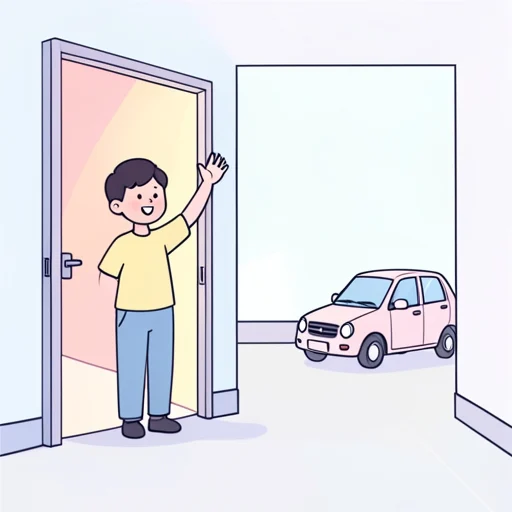
迎え means the act of meeting or welcoming someone, especially upon arrival, and is used as a noun in everyday and formal language.
Main meanings
- the act of greeting or meeting someone upon arrival
- the reception or welcome given to a guest or at an event
- the noun form used for a meeting arrangement or pickup, as in 迎えに行く
How to use it
Used in both formal and casual speech to describe meeting someone, welcoming guests, or the act of going to pick someone up. Common expressions include 空港での出迎え, 誰かを迎えに行く, 迎え入れる; these show how 迎え functions in different social and linguistic contexts.
Variants and close terms
- 出迎え (でむかえ) demukae — direct arrival greeting
- 歓迎 (かんげい) kangei — reception, warm welcome
- 見送る (みおくる) miokuru — to see off, antonym
Composition
- 迎: the core meaning is to meet or welcome; the radical 辶 denotes movement toward someone, reflecting the action of approaching to greet; the combination yields the concept of moving toward someone to greet them and formalize a reception
- え: noun-form suffix turning the verb 迎える into the noun 迎え, representing the act or process of meeting or welcoming
Etymology
Kanji etymology: 迎 is a phono-semantic character; the radical 辶 signals movement, while the right-side component conveys the notion of approaching or facing. The on'yomi reading is ゲイ and the kun'yomi is むか-える. The noun 迎え is formed from the verb 迎える by turning the verb stem into a noun with the suffix え.
Word class
noun (名詞); used as the noun form of 迎える, and as part of phrases like 迎えに行く, 出迎え