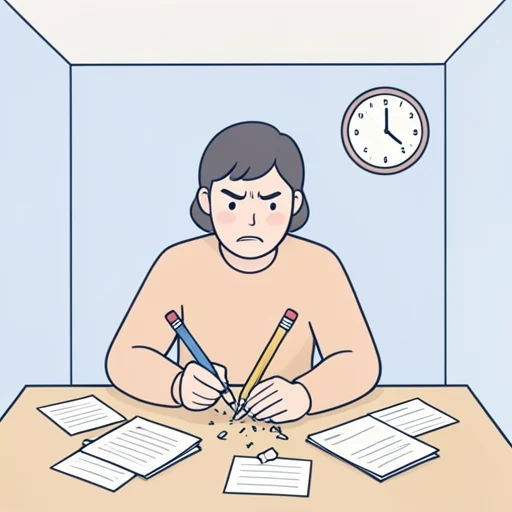
悔しい
Meaning in Englishfrustrating, regrettable, vexing
Animated kanji stroke order
Related sentences
Related sentences
There are no published items in this section yet.
Word context
What it means
悔しい means a strong personal feeling of regret and frustration after failing to achieve something or missing an opportunity; it conveys that the outcome is hard to accept and motivates improvement.
Main meanings
- personal regret and frustration after a defeat, mistake, or missed opportunity
- intense disappointment that motivates a corrective effort
- casual, emphatic expression used in everyday speech to describe emotional reaction
How to use it
Used across casual and polite speech to describe a personal emotional reaction to an unsuccessful outcome. It commonly follows clauses describing failure and can be softened with です in polite contexts. It is typically directed at the speaker's own experience rather than others' actions, and may be extended with て or てたまらない to increase emphasis.
Variants and close terms
- 残念 (zannen) — disappointment
- 腹立たしい (haradatashii) — frustration, anger
- 恨めしい (urameshii) — resentful
Composition
- 悔: expresses regret; related to remorse
- しい: adjectival suffix forming an i-adjective; combines with the stem 悔む or the concept of regret to describe a state
Etymology
kuyashii is built from the verb 悔む (くやむ) meaning to regret. The kanji 悔 supplies the core meaning of regret; adding the 〜しい suffix forms an i-adjective that denotes a state or feeling, and the pronunciation uses the kun-reading of 悔む, yielding the modern form.
Word class
adjective (i-adjective) (形容詞・い-adjective)