払い込む
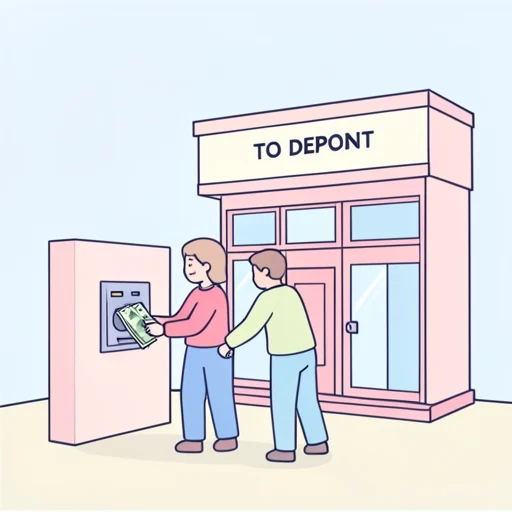
Meaning in Englishto deposit, to pay in
Animated kanji stroke order
Related sentences
Related sentences
There are no published items in this section yet.
Word context
What it means
It means to pay in, i.e., to remit money or deposit funds into a recipient's account or form of payment. The action is financial and formal, typically used in banking, bill payments, and organizational dues.
Main meanings
- Deposit funds into an account or recipient by transferring money rather than paying with cash
- Contribute money to a group, fund, or membership, settling a shared expense
- Indicate the completion of a payment in financial documents and banking contexts
How to use it
Used in formal and semi-formal financial contexts as a transitive verb that takes a direct object (what is paid) and a destination (where the payment goes). Common in banking, invoices, and dues processing; less common in casual speech compared to simpler verbs like 払う or 支払う.
Variants and close terms
- 振り込む (furikomu) — transferring money into an account
- 支払う (shiharau) — to pay (general)
- 入金する (nyūkin suru) — to deposit funds
Composition
- 払い: noun form of 払う meaning to pay
- 込む: kanji indicating 'to enter/insert' used as a verbal suffix here to express the action of inserting funds into a recipient or account
Etymology
払い derives from the noun form of 払う meaning to pay, with 込む meaning to insert or push into; together they form a native Japanese verb meaning to push a payment into a recipient or system.
Word class
verb (動詞), transitive