沖
Meaning in Englishopen sea, offshore, off the coast
Animated kanji stroke order
Related sentences
Related sentences
There are no published items in this section yet.
Word context
What it means
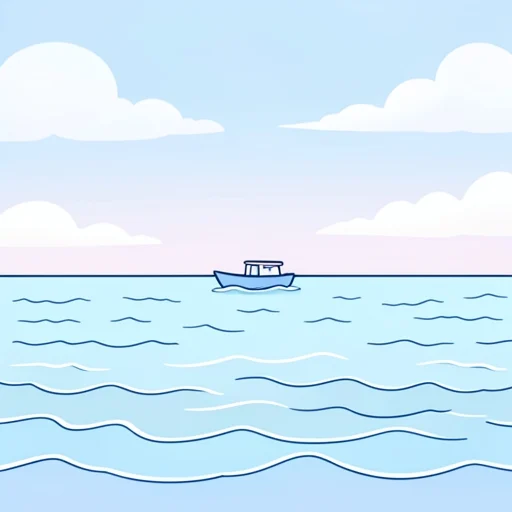
What does 沖 mean? It designates the part of the sea that lies away from the shore—the open water beyond the near coast. In nautical and coastal contexts it signals distance from land and serves as a geographic descriptor for offshore areas rather than nearshore zones.
Main meanings
- Open sea, the area of the sea beyond the near coast, i.e., the offing
- Distance from land used in navigation and coast descriptions to indicate offshore locations
- As a toponym component in place names denoting offshore regions; appears in Okinawa-related names
- Geological terms such as 沖積層 and 沖積平野, meaning alluvial deposits formed in coastal contexts
How to use it
Used in maritime contexts, geography, and literature; formal and technical registers in geology (沖積層), navigation terms; in everyday language, by itself it is rare outside proper nouns; common in compound forms and place names; typical usage includes 沖へ出る, 沖合い, 沖積層, 沖縄.
Variants and close terms
- おき (oki) — main kun reading
- おきあい (okiai) — 沖合い, offing
- コウ (kō) / チュウ (chū) — on readings in compounds such as 沖積層, 沖積平野
- 岸/陸 (ki / riku) — antonyms referring to shore/land
Composition
- 氵: water radical indicating relation to water or sea
- semantic element expressing distance/offshore concept; together they form the idea of offshore water
Etymology
Phonetic evolution The kanji 沖 combines a water radical signaling a relation to water, with a semantic element that historically evokes depth or distance, and its readings spread across kun おき (oki) for the sea sense and on コウ/チュウ (kō/chū) in compounds; this reflects its shift from a concrete water reference to a broader nautical/figurative sense.
Word class
noun (名詞)