虎
Meaning in Englishtiger
Animated kanji stroke order
Related sentences
Related sentences
There are no published items in this section yet.
Word context
What it means
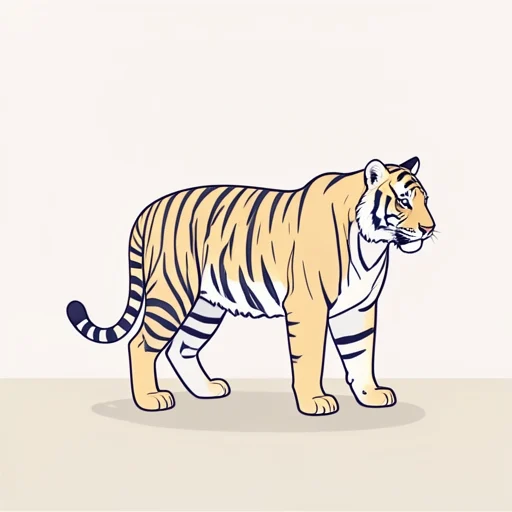
What does 虎 (tora) mean? It is the Japanese common noun for the tiger, referring to the large, striped wild cat (Panthera tigris) and used primarily to name the animal itself in speech and writing.
Main meanings
- As a calendar/zodiac label: the Year of the Tiger in the East Asian zodiac cycle.
- Figurative use to describe a fierce, powerful, or aggressive person or thing.
- Component in compounds to convey tiger-like qualities (strength, ferocity, striped pattern).
- Motif name when referring to a tiger pattern or design used in textiles and art.
How to use it
Used wherever the animal is referenced: natural history and zoo signage, children's books, everyday conversation (casual speech uses the spoken form), and formal writing or names where the kanji 虎 (tora) appears; also appears in idioms, sports/team names and visual design contexts as a symbol rather than a literal animal.
Variants and close terms
- トラ (とら, tora) – katakana form often used in names, brands, and emphasis.
- 虎柄 (とらがら, toragara) – tiger pattern (design term).
- 猛獣 (もうじゅう, moujū) – 'fierce beast', general synonym for large predatory animals.
- 豹 (ひょう, hyō) – 'leopard', a related big cat often contrasted with tiger.
Composition
The character 虎 is essentially a pictograph representing the animal: its strokes depict a stylized head, body and striped pattern; the traditional element 虍 is associated with the tiger radical family and the whole character functions as the single-kanji word meaning 'tiger'.
Etymology
虎 (tora) carries a native Japanese kun reading tora from Old Japanese; the Sino-Japanese on'yomi (e.g., ko) derives from a Middle Chinese pronunciation that was borrowed into Japanese phonology.
Origin
Tigers are not native to the Japanese islands; the image and concept of the tiger arrived via continental Asia (China and Korea) with Buddhist texts, art, and trade from ancient times, becoming established in court art, textiles, religious iconography, and later popular prints and samurai motifs.
Word class
noun (名詞)