象
Meaning in Englishelephant
Animated kanji stroke order
Related sentences
Related sentences
There are no published items in this section yet.
Word context
What it means
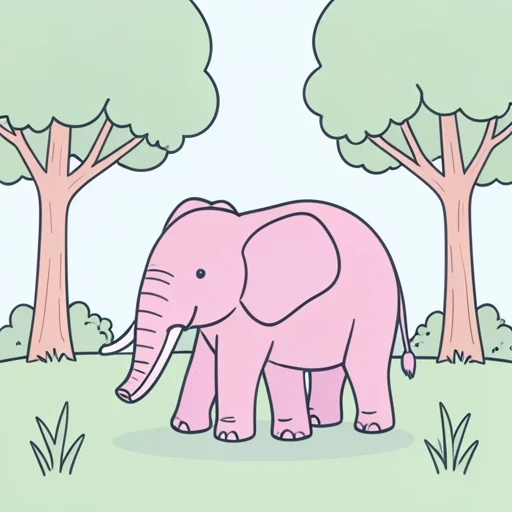
象 (ぞう) means 'elephant' — the large, tusked mammal commonly referenced in zoological and everyday Japanese speech.
Main meanings
- Image or likeness used for portraits, statues, or visual representations.
- Symbol or emblem when appearing in compounds that denote representation or standing-for something.
- Phenomenon or observable occurrence in scientific and philosophical compounds.
- Abstract sense of shape, form, or outward appearance when used in discussions of appearance or manifestation.
How to use it
Appears when referring to the animal in everyday and educational contexts (often written in kana for children) and widely inside Sino-Japanese compounds to express abstract senses; casual speech uses kana or katakana for emphasis, while academic, scientific and literary texts use the kanji—common compound examples include 象徴 (shouchou) for 'symbol' and 現象 (genshou) for 'phenomenon'.
Variants and close terms
- 像 (ぞう, zou) — alternative kanji meaning 'image' or 'statue'.
- ゾウ (ゾウ, zou) — katakana form, used for emphasis, children's materials, or branding.
- イメージ (iimeeji, image) — loanword often used as a modern synonym for 'image'.
Composition
象 (ぞう) is a pictographic character originally stylizing an elephant: stroke groups suggest trunk and tusks with marks for body and legs, and as a single kanji it conveys both the concrete animal and extended meanings related to form, appearance, and representation.
Origin
The concept and character arrived in Japan with Chinese writing and Buddhist texts during the early medieval period; elephants themselves were not native to Japan, so the kanji and idea circulated via imported literature, religious art, and trade descriptions, becoming established in classical Japanese vocabulary and later in modern compounds.
Word class
noun (名詞)