駅
Meaning in Englishstation
Animated kanji stroke order
Related sentences
Word context
What it means
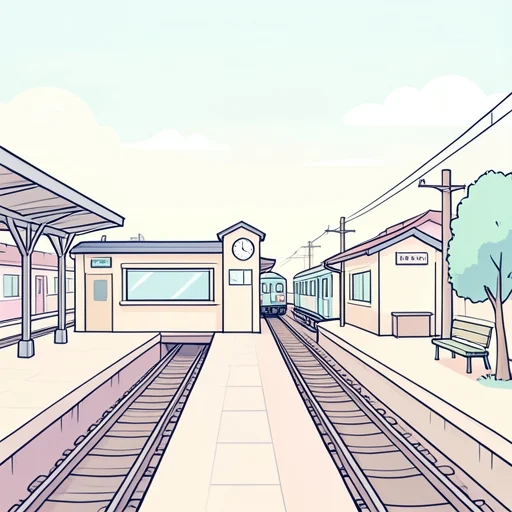
What does 駅 mean? 駅 (eki) denotes a station on a transportation line—most commonly a railway station—meaning a designated place where trains stop to let passengers board and alight and which typically includes platforms, ticket gates, signage and passenger facilities; it functions as a named node on maps, timetables and route systems.
Main meanings
- 1. Used as a bound element in compounds to indicate station-related roles or facilities (for example staff or buildings).
- 2. Metonymically refers to the commercial or meeting area centered on a station rather than the physical platforms.
- 3. Appears as a shorthand meeting point or landmark in everyday speech and directions where the station name alone identifies a location.
- 4. In everyday usage, extended to stops on other urban transit modes (metro, tram) even when not strictly a railway station.
How to use it
Used widely in signage, maps, timetables, travel announcements and everyday conversation to indicate where passengers board or leave transit; the noun is neutral in politeness and appears in both casual directions and formal public announcements, and it commonly combines with place names, exit numbers and facility terms to give precise navigation information without additional qualifiers.
Variants and close terms
- 停留所 (teiryūjo) — bus or tram stop
- 停車場 (teishaba) — older term for a stopping place or station
- 駅舎 (ekisha) — station building
- ホーム (hōmu) — platform
- バスターミナル (basutāminaru) — bus terminal
Composition
駅 (eki) is written with the 馬 component (the horse radical) indicating an association with transport or horse-related movement and the phonetic component 亦 supplying the sound element; together these parts form the character read as eki and denote a place related to transit stops.
Origin
The concept traces back to premodern relay/post stations on Japan’s highways that served couriers and official traffic; with the Meiji-era introduction of railways (the first Japanese railway opened in 1872), the same term was applied to modern train stations and became central to urban planning, timetables and public transport vocabulary.
Word class
noun (名詞)