乗り換え
Meaning in English(n) transfer (trains, buses, etc.)
Animated kanji stroke order
Related sentences
Related sentences
There are no published items in this section yet.
Word context
What it means
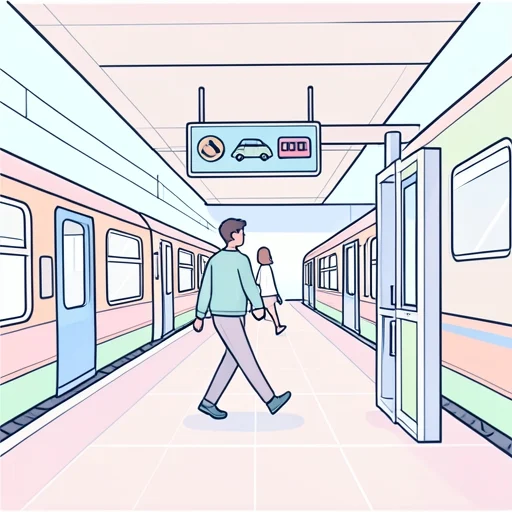
What does 乗り換え mean? It denotes the act of switching from one vehicle or route to another within a transit system, typically at a transfer point; used for trains, buses, or other forms of public transport, and can also refer to switching to a different service or plan in everyday life.
Main meanings
- Primary meaning: switching from one line or mode to another during a journey
- Usage in transit information: indicates transfer points or directions
- Figurative usage: switching to a different service, plan, or option in daily life
How to use it
Used as a noun and in constructions with する to form 乗り換えをする; common in formal announcements, travel planning, and everyday speech. Practical usage includes referring to station transfers, transfer guides, and planning routes that involve changing vehicles.
Variants and close terms
- 乗り換え (norikae) — standard spelling
- 乗継ぎ (noritsugi) — variant spelling
- 乗換え (norikae) — alternate kanji form
Composition
- 乗: ride, board
- 換え: exchange, replace; here in the noun form 換え to indicate the act of swapping
Etymology
乗り + 換え forming a compound noun read as norikae, where 乗り is the nounized form of 乗る (to ride) and 換え comes from 換える (to exchange/replace); the combination expresses the action of exchanging a ride or route.
Origin
Modern public transport emerged in Meiji-period Japan, with railway networks creating frequent need to switch between lines or modes; the term spread into everyday language as transfer between routes became commonplace and later extended to buses and other services.
Word class
Noun (suru-verb)