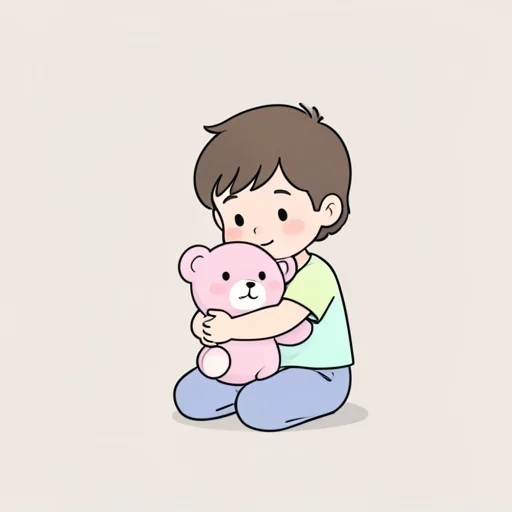
抱っこ
Meaning in English(child's) hug
Animated kanji stroke order
Related sentences
Related sentences
There are no published items in this section yet.
Word context
What it means
What does 抱っこ mean? It refers to the act of lifting a child into the arms and carrying them, typically to comfort or transport them; it functions as a noun and as the verb 抱っこする used to perform the action.
Main meanings
- the primary sense: holding a child in one's arms for comfort or transport — dakko
- an affectionate or playful holding of a baby or small pet, usually in casual speech — dakko
- a caregiver gesture widely used in family life; more common in spoken language than in formal writing — dakko
How to use it
Used in casual to intimate contexts, especially within family, childcare, and everyday conversations; the standard verb form is 抱っこする to perform the action, and 抱っこ itself can function as the noun for the act; it is less common in formal or technical writing.
Variants and close terms
- だっこ dakko — the common form identifying the act itself
- おんぶ onbu — carrying a child on the back, a related caregiving method
- 抱える kakaeru — to hold or bear something in one's arms, related but not identical in gesture
Composition
- 抱 = to embrace, hold close
- っ = small tsu, indicates gemination of the following consonant
- こ = suffix that helps form a noun indicating the act or gesture
Etymology
Etymology From the verb 抱く with the stem 抱っ- and the affectionate suffix こ, forming a noun that denotes the act of holding someone in the arms; the small っ signals a rapid consonant onset in the pronunciation.
Word class
Noun (名詞); also the basis for the verb 抱っこする