昼
Meaning in Englishnoon, daytime
Animated kanji stroke order
Related sentences
Word context
What it means
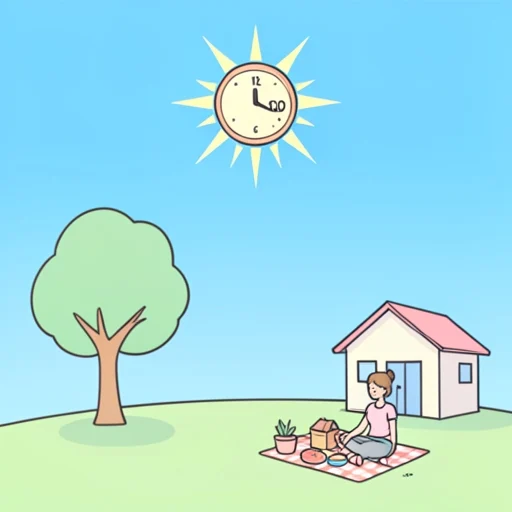
昼 (hiru) means the period of daylight centered on midday; it refers to the hours between morning and evening and is used to indicate the time around noon, lunchtime, or general daytime on schedules and in conversation.
Main meanings
- Noon specifically, the moment around 12:00.
- An informal reference to lunchtime or the meal taken at midday.
- The daytime span as contrasted with night, often used in contexts like work shifts or operating hours.
- A programming or broadcasting slot that airs during daytime hours.
- Figuratively, the bright or active part of a daily cycle as opposed to the night.
How to use it
Used broadly in everyday speech and writing to refer to midday or daytime in both casual and formal contexts; common in schedules and timetables, in conversation about lunch or plans, and in compound words to indicate daytime-related activities (when quoting Japanese, include romaji in parentheses).
Variants and close terms
- 昼間 (ひるま, hiruma) — daytime (emphasizes the span of daylight hours)
- 昼休み (ひるやすみ, hiru yasumi) — lunch break/midday rest
- 昼下がり (ひるさがり, hirusagari) — early afternoon
- 夜 (よる, yoru) — night (antonym)
Composition
The character combines the 日 radical, meaning 'sun' or 'day', with a lower component that historically conveys 'center' or 'midpoint'; together the elements evoke the sun at its middle position in the sky, giving the sense of midday or daytime.
Origin
The written form arrived with Chinese characters introduced to Japan in the early historic period; the concept of dividing the day into daytime and nighttime appears in classical Japanese records, and the character is attested in Heian-period texts used to mark times of day and daily activities.
Word class
noun (名詞)