精神
Meaning in Englishmind, spirit, mentality
Animated kanji stroke order
Related sentences
Related sentences
There are no published items in this section yet.
Word context
What it means
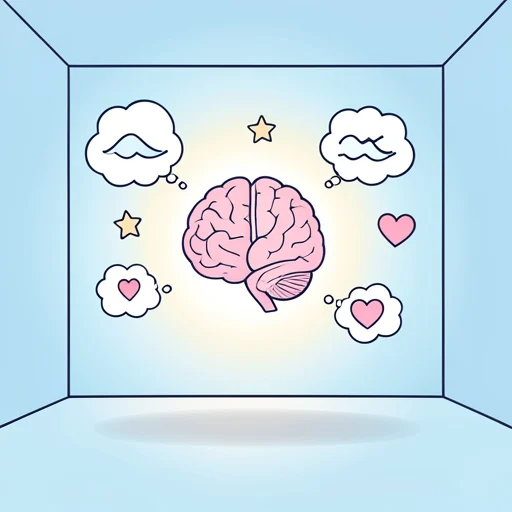
精神 means the mind or spirit—the seat of thoughts, emotions, and will; it is used to describe a person’s mental life, mood, and psychological and spiritual condition.
Main meanings
- Mind, psyche, or consciousness—the inner faculties that think and feel
- Spirit or soul—the non-material essence or animating force
- Mental state or mood at a given time—the condition of one's cognition and emotions
- A philosophical or psychological concept referring to mental life or spiritual aspects, commonly seen in terms like 精神的
How to use it
Used primarily as a noun in formal and written contexts to refer to the mind or spirit; in everyday language it appears in phrases like 精神を集中する and 精神的な状態, and in disciplines such as psychology, philosophy, and medicine to discuss mental life and well-being.
Variants and close terms
- 心 (kokoro) — mind, heart
- 心理 (shinri) — psychology, mental processes
- 精神的 (seishinteki) — mental, psychological
- 精神状態 (seishin jōtai) — mental state
Composition
- 精: essence, refined energy
- 神: spirit, deity
Etymology
Two on'yomi components, 精 (sei) and 神 (shin), combine to form seishin; the compound arose in Sino-Japanese lexicalization and is read as seishin in modern Japanese.
Origin
Introduced to Japanese through Chinese philosophical and Buddhist writings, the term was established in classical Japanese to denote the mind and spirit and later extended to encompass mental states and psychological aspects.
Word class
Noun (名詞)