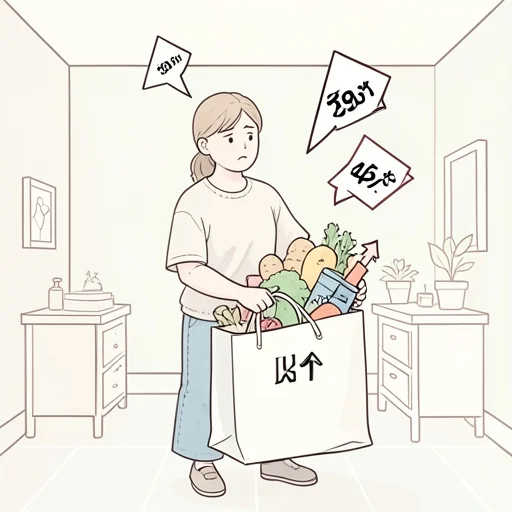
最近は物価が上がるばかりで生活が大変になってきた
Meaning in EnglishRecently prices keep rising and life became difficult
Animated kanji stroke order
Word
Words found in the sentence
Kanji
Related kanji
N3
最
sai, shu / motto.mo, tsuma
utmost, most, extreme
N4
近
kin, kon / chika.i
near, early, akin
N4
物
butsu, motsu / mono, mono-
thing, object, matter
N1
価
ka, ke / atai
value, price, prix
N5
上
jou, shou, shan / ue, -ue, uwa-, kami, a.geru, -a.geru, a.garu, -a.garu, a.gari, -a.gari, nobo.ru, nobo.ri, nobo.seru, nobo.su, tatematsu.ru
above, up, au-dessus
N5
生
sei, shou / i.kiru, i.kasu, i.keru, u.mareru, uma.reru, u.mare, umare, u.mu, o.u, ha.eru, ha.yasu, ki, nama, nama-, na.ru, na.su, mu.su, -u
life, genuine, birth
N3
活
katsu / i.kiru, i.kasu, i.keru
lively, resuscitation, being helped
N5
大
dai, tai / oo-, oo.kii, -oo.ini
large, big, grand
N3
変
hen / ka.waru, ka.wari, ka.eru
unusual, change, strange
Grammar
Related grammar structures
N4
〜ばかり
bakari
Indicates repetition, excess, or focus on only one thing, attaches to noun or verb, means only or keep doing
N4
〜ば
ba
Indicates a hypothetical condition, attaches to verb or adjective, means if it happens then
N5
〜が
ga
Marks the grammatical subject, highlights new information, can also show slight contrast in some sentences
N5
〜に
ni
Indicates destination, target, arrival point, specific time, or person receiving an action
N5
〜で
de
Indicates where an action happens, means used, tool, cause, or material depending on context
N5
〜か
ka
Marks a question, alternative, or uncertainty, appears at the sentence end or between options
N5
〜は
wa
Marks the topic of the sentence, indicates what the sentence is about, can contrast with another element, organizes main information